

Two quoted LVL beam sizes can both read 45 x 240 x 6000 mm and still name different load-bearing products. Their grade, veneer layup, treatment, design values and permitted joints may not match. Therefore, size alone never proves capacity or a safe swap.
This article explains how to read LVL beam sizes across major markets. It also shows what width, depth and length change in practice. Most of all, it turns an engineer-selected member into an order that the mill, buyer and site team can read the same way.
The examples are ordering aids, not span tables. Final member choice must follow the project loads, local code and approved maker data. For current product families, see the SENSO laminated veneer lumber range.
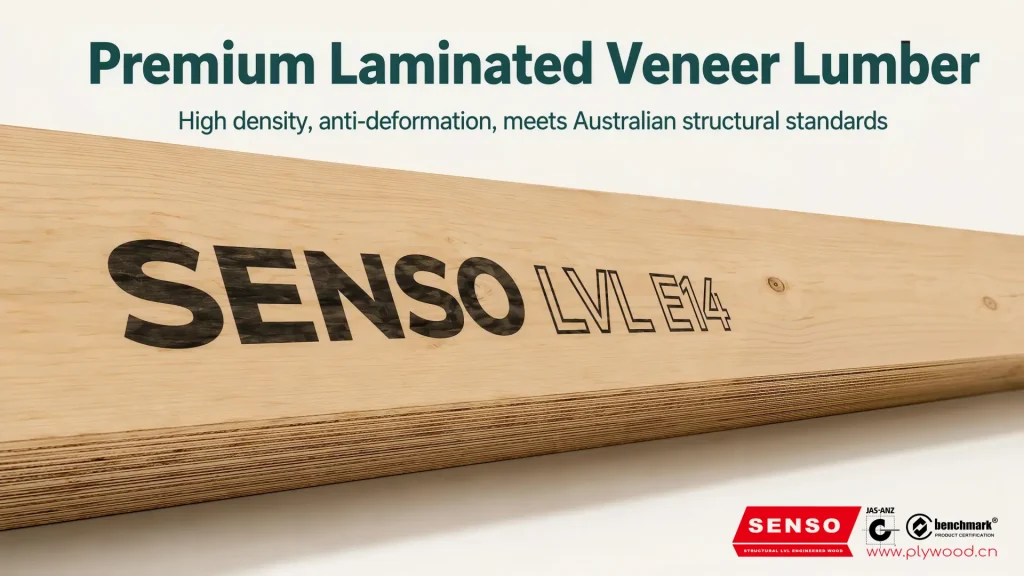
LVL Beam Sizes in One Clear Answer
Common LVL ranges often use thicknesses from about 35 to 75 mm. Depths may run from about 90 to 600 mm. Lengths may run from 1.2 to 13.2 m. However, these are market patterns, not one global standard. Europe, North America, Australia and New Zealand use different size groups.
The safe answer is simple. State the finished thickness, depth and cut length. Then add the exact grade and approved design data. Also state treatment, use class, size limits, joint method and lot marking. Without those linked fields, a list of LVL beam sizes is only a cutting list.
An LVL beam size is a set of measures, not a load capacity. Capacity belongs to the named product, its design data and its installed load path.
A Size Is Not a Capacity
LVL is made from graded veneers bonded mainly in the long direction. The mill then cuts beam sizes from a larger billet. The APA explanation of structural composite lumber describes this route and the product’s grain layout.
Shape still matters, but it does not act alone. For a plain rectangular section, the second moment of area follows I = b x h^3 / 12. The section modulus follows S = b x h^2 / 6. Here, b is thickness and h is depth.
Therefore, a 10 percent increase in depth raises I by about 33.1 percent. It raises S by about 21 percent. In contrast, a 10 percent increase in thickness raises both by 10 percent. These ratios describe shape only. They are not design values.
| Section change | Geometric effect | Practical reason to consider it | Check that still controls |
|---|---|---|---|
| Increase depth | Strong effect on bending stiffness and section modulus | Deflection, span efficiency and floor feel | Lateral restraint, bearing, shear and service holes |
| Increase thickness | Linear increase in section properties | Bearing area, shear area and connection space | Load sharing between plies and hanger fit |
| Add another ply | Wider built-up member if plies act together | High reactions or a wall-width target | Fastener schedule and load entry into every ply |
| Increase length | No direct gain in section capacity | Removes a splice or support | Transport, handling, temporary bracing and waste |
This rule prevents a common mistake. A buyer may ask for a wider member when beam movement calls for more depth. Another job may need more bearing width, not a deeper beam. Therefore, what can fail must guide the size.
Read the Three Sizes in the Right Order
Size order changes between drawings, quotes and markets. A beam list may show depth x thickness. A mill may quote thickness x depth. A warehouse label may add length without naming either cross-section side. The same digits can then describe two different members.
Always name each field. For example, state 45 mm thickness x 240 mm depth x 6000 mm cut length. On drawings, show which face is upright. On the order, repeat the field names instead of trusting the number order.
Nominal and finished sizes are separate data
A nominal trade size may not equal the measured section. Sanding, cutting, coating and local rules can change the delivered size. Therefore, the order should state finished sizes and allowed limits. The first-off check should measure both thickness and depth before mass cutting starts.
Size limits also affect hardware. A beam that is slightly too deep may sit above the next joist. A beam that is too thin may not fill a hanger seat. Meanwhile, a built-up member can miss a wall line when small errors add across its plies.
Metric and inch-based sections are not exact substitutes
A 1.75 in ply equals 44.45 mm, not 45 mm. Likewise, an inch-based depth may not match the nearest metric size. A small change can affect hangers, blocking, wall thickness and factory-cut openings.
For that reason, never convert a catalog by rounding sizes alone. Convert the whole approved system. That system includes section size, grade, design values, hardware and site rules.
LVL Beam Sizes Across Three Supply Systems
Stock programs reflect local frame modules, design methods and shipping needs. For example, the Metsa Wood Kerto LVL S-beam range lists 45, 51, 57 and 63 mm thicknesses. Its listed depths run from 200 to 600 mm. Other markets use different modules.
| Supply system | Typical catalog pattern | Common ordering habit | Main substitution risk |
|---|---|---|---|
| Australia and New Zealand | 35, 45, 63 and 75 mm thicknesses; depths commonly extend from 90 to 600 mm; long lengths may reach 12 to 13.2 m | Depth x thickness x length, plus LVL or E grade and treatment | Same grade label may not carry the same verified design values across products |
| Continental Europe | Beam thicknesses often include 45, 51, 57 and 63 mm; beam depths may run from 200 to 600 mm | Product strength class, cross-section and Declaration of Performance | A panel-derived size may have a different veneer orientation from an S-beam |
| North America | A 1.75 in single ply is common; built-up widths often use two, three or four plies; depths follow manufacturer series | Thickness x depth x length with an evaluation report or product guide | Metric rounding and unapproved built-up connections |
| Export and custom manufacture | Thickness, depth and cut length can follow project modules within the approved production range | Named dimensions, grade, bond, treatment, marking and packing in one order code | Custom geometry may be quoted without matching structural evidence |
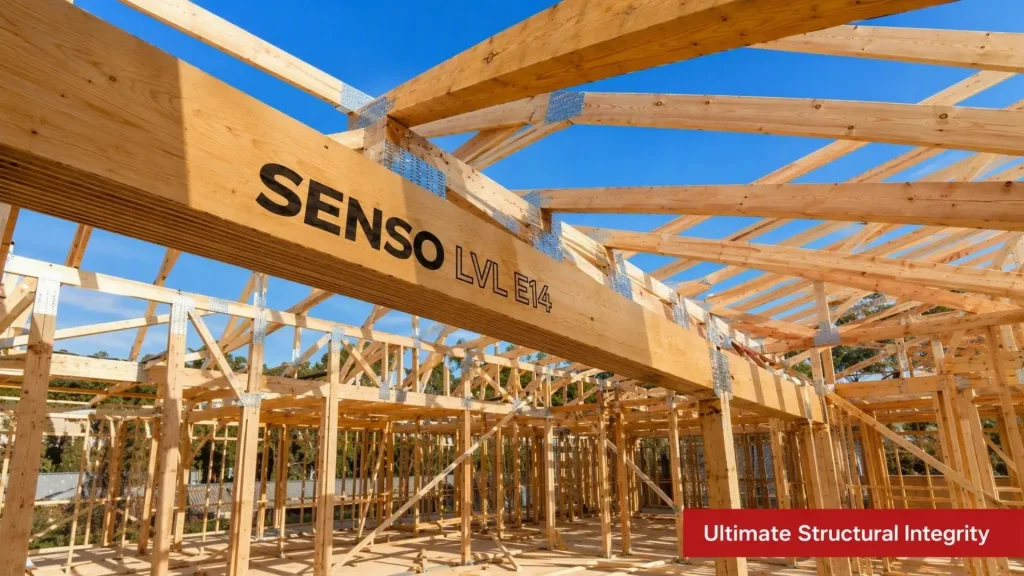
The table is a market map, not a stock promise. Stock changes by maker, depth, grade, treatment and region. Therefore, check every size against current product data before design release.
Choose the Cross Section from What Can Fail
The cheapest section is not the one with the lowest price per cubic metre. It is the smallest approved member that passes every design and site check without adding work.
Beam movement often selects depth before strength
A beam can pass a bending strength check and still feel too flexible. Floors may vibrate. Ceilings may crack. Doors below may bind. Long-term creep can also increase movement after the building is occupied.
Therefore, the designer checks both short-term and long-term movement. The service limit may need a deeper section even when strength looks sound. This is why span cannot be answered from size alone.
Bearing can select thickness
Reactions enter the beam at supports. If the bearing length or beam thickness is too small, compression at the support can control. Hanger capacity and post width can also set the required thickness.
More depth does not always solve a bearing problem. Instead, the design may need more bearing length or more thickness. It may also need a new hanger or a higher approved product value.
Joints can reject an adequate beam
Built-up LVL members need joints that share load. Nails, screws or bolts must move load into plies that do not receive it at once. Moreover, the fixing pattern must meet edge distance, spacing, moisture and fire rules.
Maker limits also matter. Weyerhaeuser, for example, gives product rules for beams, headers and columns in its Trus Joist Specifier’s Guide. Those rules do not pass to another LVL product by default.
Side restraint can change the answer
Deep beams can become slender. Their top edge may need full side restraint. Supports may also need blocks to stop rotation. During lifting, a long member can be less stable than it will be in the finished frame.
As a result, the order and work plan should align. A deeper beam may work well in the final building. Yet it may need more temporary bracing during site work.
Holes and notches are not minor size edits
Cutting a notch changes the stress flow. Drilling a large hole can reduce shear capacity. Trimming the depth on site creates a different section from the approved member.
Therefore, do not approve service holes with a general timber rule. Use the named LVL maker’s hole and notch guide. Otherwise, obtain a project design check.
Give Every Member a Size Passport
A sound order links size to proof. We call this linked record a size passport. It moves from the engineer’s beam list to the purchase order, mill label, packing list and site receipt.
| Passport field | What to state | Why it matters |
|---|---|---|
| Product identity | Manufacturer, product family and structural grade | Prevents a dimension-only substitution |
| Finished section | Named thickness and named depth in mm or inches | Removes dimension-order ambiguity |
| Cut length | Finished length, end condition and tolerance | Controls fit, waste and shipment planning |
| Design basis | Governing standard, certificate or evaluation report and approved design data | Connects the member to verified properties |
| Service condition | Internal, protected external or other stated exposure | Affects durability and design adjustments |
| Treatment and bond | Untreated, H2S, H2, H2F, H3 or project requirement, plus approved bond specification | Prevents treatment assumptions |
| Connection basis | Single ply, built-up ply count, fastening schedule and connector family | Defines how load enters the section |
| Traceability | Piece or bundle mark, batch, production date and inspection record | Supports release and later verification |
For a SENSOframe Structural LVL Beam, a mill order should carry more than 45 x 300 x 7200 mm. It should also name the approved grade, treatment, proof, size limits, marks and bundle plan.
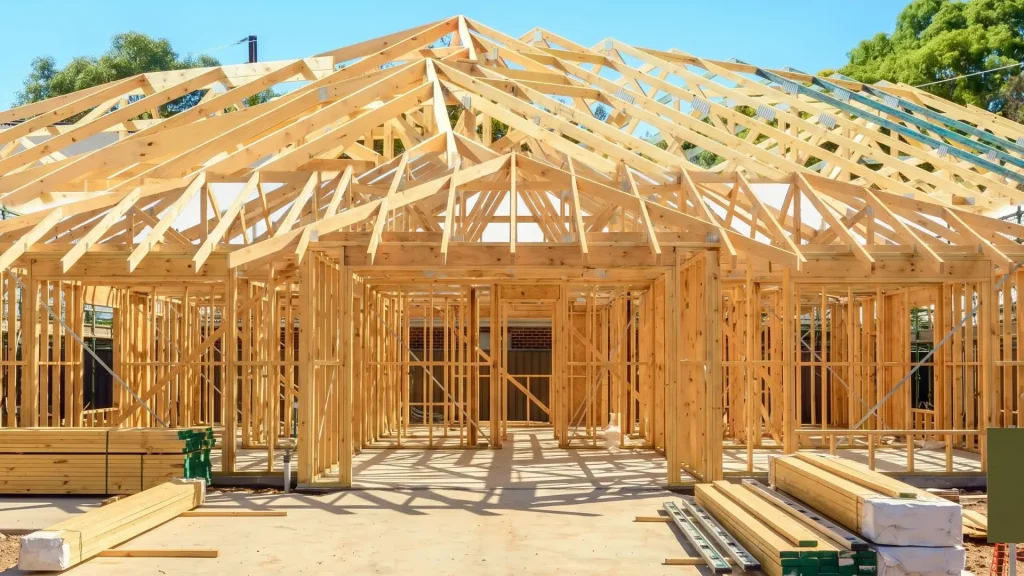
Length Is Both a Design and Shipping Variable
Long LVL can remove joints and mid supports. However, the longest beam a mill can make is not always the cheapest beam to deliver. Mill handling, trailers, port rules, container access, crane reach and site storage can change the result.
Volume per piece is easy to check:
Volume in m3 = thickness in mm x depth in mm x length in mm / 1,000,000,000.
Planned piece mass then equals volume times the supplier’s stated shipping density. Do not use a general density when the lift plan depends on the answer.
| Example section | Length | Volume per piece | Approximate mass at 550 kg/m3 |
|---|---|---|---|
| 45 x 300 mm | 6000 mm | 0.0810 m3 | 44.6 kg |
| 45 x 300 mm | 9000 mm | 0.1215 m3 | 66.8 kg |
| 45 x 300 mm | 12000 mm | 0.1620 m3 | 89.1 kg |
These masses are planning examples, not approved lift weights. Moisture, treatment, wood mix, coating and actual size can change mass. Therefore, check packed weights before booking transport or choosing lift gear.
Length planning should happen before the purchase order. Compare cut yield, splice cost, handling risk and container fill together. A slightly shorter stock plan can cut landed cost when it fits the cut list and transport.
Custom LVL Beam Sizes Need a Business Case
Custom sections can cut waste in parts that repeat. They can also match set wall, floor or formwork systems. However, custom work adds minimum order limits, mill planning, special saw settings, separate marks and extra checks.
Use a custom section when the savings repeat across enough pieces. For example, a job may gain value from an exact flange size, edge-form member or repeated lintel module. In contrast, a one-off size may cost more than cutting an approved stock section.
End use must stay clear. SENSOform LVL Formwork Beams use sizes and finishes made for concrete work. A formwork member should not replace a building beam just because its section looks alike. The proof must match the real use.
Before approving a custom run, confirm these commercial points:
- Approved design values for the exact product family and grain layout.
- Minimum mill quantity for each section, grade and treatment.
- Cut-length limits and allowed end trim.
- Required markings on pieces and bundles.
- Packing supports for long members and moisture protection in transit.
- Replacement terms if first-off sizes fail sign-off.
Release LVL Beam Sizes Through Five Gates
One person should not approve size while another guesses the missing design data. Instead, use five release gates.
- Design gate: Confirm loads, span, supports, beam movement, stability, fire and service life needs.
- Product gate: Match the exact maker, grade, design data, grain layout and allowed size range.
- Joint gate: Approve hangers, ply fixing, bearing, holes, notches and temporary restraint.
- Mill gate: Approve finished sizes, limits, treatment, moisture, first-off sample and marks.
- Shipping gate: Approve cut yield, bundle size, supports, mass, container plan, unloading and site storage.
A quote that shows only size, cubic volume and price has not passed these gates. It may still help with a budget. However, it is not ready for final sign-off.
Translate an Engineer’s Schedule into an Order
Assume the engineer has already selected a 63 mm thick x 360 mm deep x 9000 mm long member. A weak order line reads, “360 x 63 LVL, 9 m.” It leaves the product identity, grade, tolerance, treatment and connection basis open.
A release-ready order should carry these fields:
- SENSOframe structural LVL and the approved project grade.
- 63 mm finished thickness x 360 mm finished depth x 9000 mm cut length.
- Approved design data, use class and treatment.
- Single or built-up member as shown on the beam list.
- Agreed size limits, project marks and batch records.
- Bundle and support plan approved before loading.
The final project values must replace every general phrase. Even so, this format shows the right data order. It lets the mill, certifier, buyer and installer discuss one load-bearing product.
LVL Beam Sizes Questions Buyers Ask
What are the most common LVL beam sizes?
There is no single global list. Common metric series often use 35 to 75 mm thicknesses and 90 to 600 mm depths. North America often starts with a 1.75 in ply. Always check the named maker’s current range.
What LVL size is needed for a 6 m span?
Span alone is not enough. The designer needs loads, supports, spacing, movement limits, load time, use conditions, restraint and joint details. Use approved span tables or an engineer’s check.
Is a deeper LVL always better than a wider one?
No. Depth strongly changes bending shape. Width adds bearing area, shear area and joint space. The key limit decides which size adds value.
Can two 45 mm plies replace one 90 mm member?
Only when the approved product data and joint design allow it. The plies must share load as planned. Hangers, fasteners, bearing and side restraint must also suit the built-up width.
Is 45 mm LVL the same as 1.75 in LVL?
No. A 1.75 in member is 44.45 mm before any product size limits. More importantly, the grades, design values and site rules may differ.
Can LVL depth be trimmed on site?
Do not assume so. Ripping the depth creates a new section and may remove marks or change approved use. Obtain written maker or design approval first.
What is the maximum LVL beam length?
Maximum length depends on the press, billet, saw line, treatment, transport and product proof. Twelve metres is common in many export plans, while some market ranges run longer. Check both mill and delivery limits.
Can formwork LVL be used as a permanent structural beam?
Not from size alone. Use it only when its certificate, design values, service life and project sign-off cover the long-term use.
Release One Structural Identity
The best LVL beam sizes list does not begin with warehouse stock. It begins with the load path and ends with a tracked order. Depth, thickness and length are only the shape layer between those two steps.
Therefore, keep the product name, grade, proof, treatment, joints, size limits and marks tied to every size. That rule prevents silent swaps. It also makes quotes easier to compare and mill lots easier to approve.
Website: www.plywood.cn
Email: roc@plywood.cn
WhatsApp/Call: +86 15152013388
Post time: Sep-21-2026