

Why can two 18mm panels carry very different quotes and still both be called formwork plywood? That question sits behind most searches for film faced plywood price. Buyers see the same size on paper, yet they are often comparing different cores, different overlay routes, different certifications, and very different reuse outcomes. On ROCPLEX, Film Faced Plywood is listed with hardwood or birch options, multiple thicknesses from 4 mm to 28 mm, A Bond construction, E0 adhesive, and FSC, PEFC, CE, and CARB certification options. That already tells you price does not start with thickness alone.
This is why the keyword has high conversion value. A contractor may want lower cost per pour. A distributor may want a stable product line that fits repeat orders. An importer may need a balance between opening quote, market standard, and shipping value. So this page should not chase a fake universal price table. It should show what actually moves film faced plywood price and how buyers can ask for a quote that matches the job.
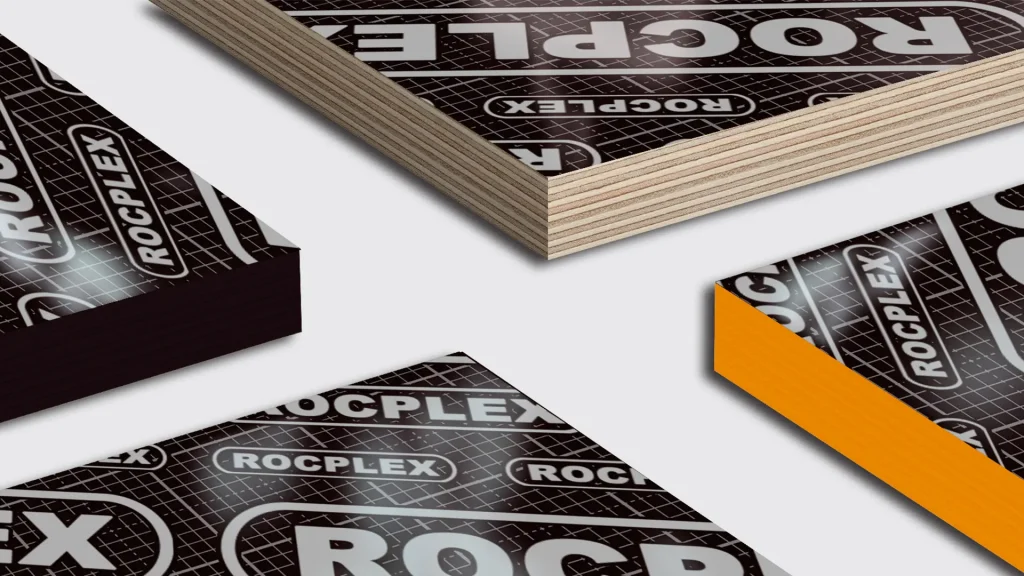
Film Faced Plywood Price Starts With the Panel Build
The panel build is the first price driver. ROCPLEX describes Film Faced Plywood as a phenolic film over a cross laminated premium hardwood veneer core, built for concrete formwork, shuttering, temporary structures, scaffolding, vehicle bodies, and container floors. The page also shows birch and hardwood routes, a G2S finish, and moisture content of 8 to 15 percent at dispatch. Those details matter because they change strength, durability, handling feel, and service life. A buyer who compares two sheets by size alone is ignoring the part that actually shapes performance.
The same site structure makes that clearer. ROCPLEX does not place film faced plywood alone. It sits next to Formwork Plywood, Formply, HDO Plyform, MDO Plyform, PP plastic faced plywood, and Xlife Plastic Formwork Plywood. If all of those products served the same job at the same cost level, there would be no reason to separate them. The price range exists because each route answers a different use case.
A Lower Film Faced Plywood Price Can Raise Cost per Pour
Many buyers still focus on cost per sheet. That is understandable, but it is rarely the best measure. ROC says ROCPLEX Film Faced Plywood offers excellent reusability because of its durable film coating and robust core structure. It also states that the panel is suitable for walls, columns, and slabs where a smooth face and multiple use value matter. In other words, the economic logic is not just the first invoice. It is how many clean pours the board can support before the panel stops saving time.
This is where a low quote often turns into a higher real cost. A cheaper panel may release poorly, wear faster, or lose flatness sooner. Then the crew spends more time on patching, stripping, replacement, and surface correction. On the same site, ROCPLEX also markets Xlife Plastic Formwork Plywood as a higher durability route and positions H20 beams around speed and cost efficiency on formwork systems. That wider product story supports the same buyer lesson: the cheapest sheet is not always the cheapest formwork decision.
A good film faced plywood price is not the lowest sheet number. It is the quote that gives the best cost per usable cycle.
What Changes Film Faced Plywood Price Faster Than Buyers Expect
The biggest price shifts usually come from a short list of factors. Core type matters. Overlay route matters. Thickness matters. Certification matters. Delivery market matters. Order volume matters. ROCPLEX Film Faced Plywood page shows the certification stack directly, while the FAQ page tells buyers to provide product type, size, quantity, and delivery location when asking for a quote. That means the site itself treats pricing as a spec based and logistics based issue, not a one line commodity number.
- core option such as birch or hardwood
- thickness and size
- overlay route such as standard film, HDO, MDO, or plastic faced
- required certifications such as FSC, PEFC, CE, or CARB
- order quantity and delivery market
- expected reuse target
- project type such as slab, wall, or column formwork
Certification can also affect price because it affects what the supplier must prove. FSC and PEFC chain of custody systems help buyers verify certified material flow through the supply chain. Those systems add market value, but they can also change paperwork, control, and cost. So a buyer asking for certified film faced plywood price should expect a different quote path from a non certified order.
Different Formwork Routes Need Different Price Logic
One of the easiest mistakes in buying is to compare standard film faced plywood, formply, HDO, MDO, and plastic faced plywood as if they should all land at the same sheet price. They should not. Some routes are built for routine pours. Others are built for cleaner finish, market specific compliance, or higher cycle life. That means a higher opening price can still be the right buy if the finish target or reuse goal is higher.
| Product route | Price logic | Best fit | Why buyers move up |
|---|---|---|---|
| Standard Film Faced Plywood | Balanced opening quote | routine slabs, walls, columns | when base cost matters most |
| ROCPLY Formply | market specific premium | Australia focused heavy duty work | when AS 6669 route matters |
| HDO or MDO Plyform | finish driven pricing | cleaner concrete surfaces and commercial formwork | when surface result and repeat use matter |
| Xlife or PP Plastic Faced Plywood | cycle driven pricing | longer run and rough use sites | when lower cost per use matters more than low sheet price |
The smart comparison is not “Which is cheapest?” The smart comparison is “Which price logic fits this project?” That question produces better enquiries and better margins.
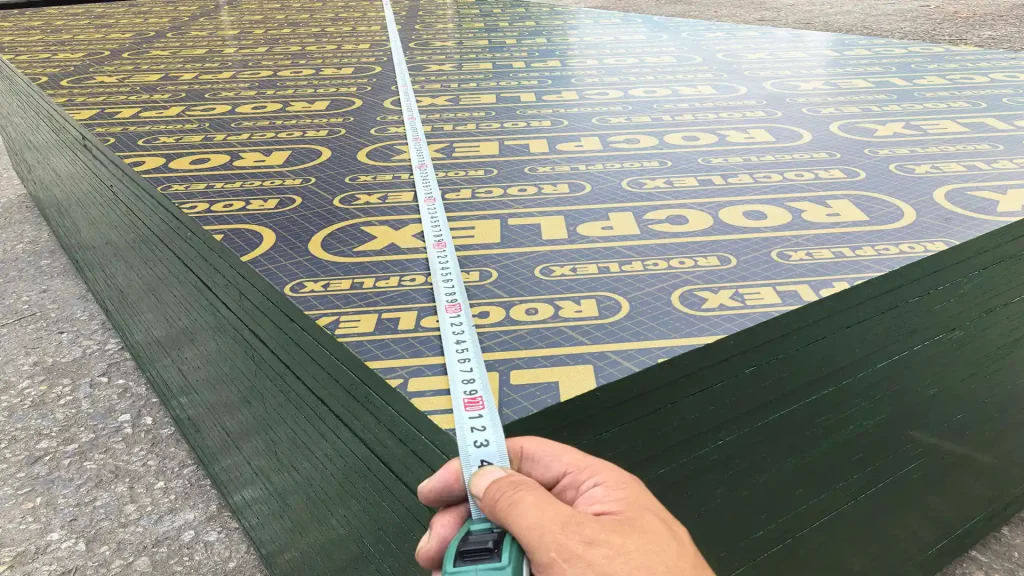
A Better Brief Produces a Better Film Faced Plywood Price Quote
The fastest way to get a weak quote is to ask only for 18 mm film faced plywood price. The faster way to get a useful quote is to describe the job. ROCPLEX FAQ already asks for product type, size, quantity, and delivery location. For this keyword, that should go further. Buyers should also state whether the panel is for slabs, walls, columns, or mixed use, whether they need better finish control, whether a specific market route matters, and how many reuse cycles they are targeting.
- state the project type first
- state panel size and thickness
- state the target market
- state whether finish quality is standard or higher
- state the expected reuse goal
- state whether FSC, PEFC, CE, or CARB is required
- state the delivery port or destination city
This is also where ROCPLEX has a conversion advantage. Its About page presents ROC as a manufacturer and wholesaler across film faced plywood, formwork plywood, H20 slab beams, LVL beams, scaffold planks, and plastic plywood. That makes mixed quoting easier for buyers who want a formwork package instead of one panel line. A better brief does not just sharpen price. It can also open a larger order.
Buyers who want a broader sourcing path can move from Film Faced Plywood to Formwork Plywood, Formply, and Xlife Plastic Formwork Plywood without leaving the site. That helps both enquiry quality and internal link strength.
Film Faced Plywood Price Questions Buyers Ask First
Why does film faced plywood price vary so much
Because buyers are often comparing different core types, thicknesses, certifications, reuse targets, and project routes rather than the same panel build.
Is the lowest film faced plywood price usually the best buy
Not always. A lower opening quote can lead to higher cost per pour if reuse, release quality, or panel stability fall short on site.
When should I move from standard film faced plywood to a premium route
Buyers usually move up when they need stricter market compliance, cleaner finish control, or more cycles from each panel.
What should I send in the first quote request
Send the project type, panel size, thickness, quantity, target market, destination, finish target, and expected reuse goal.
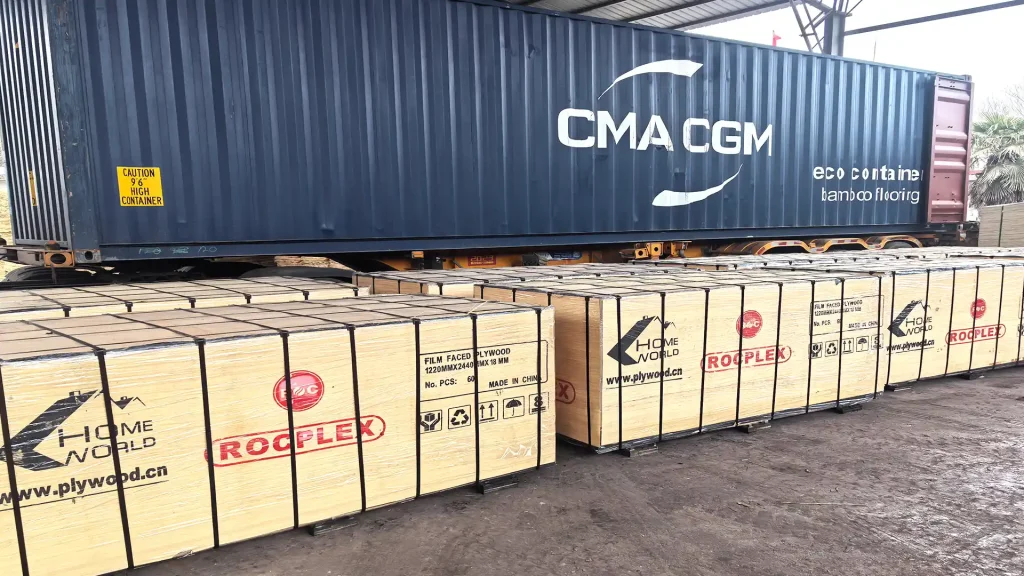
The Most Useful Next Step Is a Cost Per Use Quote
A page built around film faced plywood price should not finish with a vague sales line. It should push the reader toward a better buying method. Ask for price per sheet, but also ask what build sits inside it. Ask for price per container, but also ask what project route it fits. Most importantly, ask what the likely cost per usable cycle looks like once the panel reaches site. Buyers who start that way are more likely to choose the right board, and sellers who answer that way are more likely to win the right order.
On ROCPLEX, the strongest next path is to start from Film Faced Plywood, then compare Formwork Plywood, Formply, and Xlife Plastic Formwork Plywood before sending a quote brief. That gives the buyer a practical path from search traffic to a real enquiry without pretending there is one universal film faced plywood price for every project.
Reference sources: APA Concrete Form Panels, APA Overlaid Panels HDO and MDO, and FSC Chain of Custody.
Post time: Apr-27-2026