

This plywood quality inspection guide helps buyers reduce order risk before shipment. A plywood sheet may look acceptable from the face, yet still have core gaps, poor glue bond, weak edges, wrong thickness, high moisture, poor packing, or missing documents. Therefore, buyers should inspect the full order, not only the top sheet.
The guide is written for importers, wholesalers, furniture factories, construction buyers, formwork users, packing buyers, and project teams. It gives a clear checklist for sample review, production checks, pre shipment inspection, and container loading review.
For plywood types, sheet sizes, grades, core options, glue choices, and wholesale supply, buyers can also review the main plywood supplier and manufacturer page.
Inspection Summary
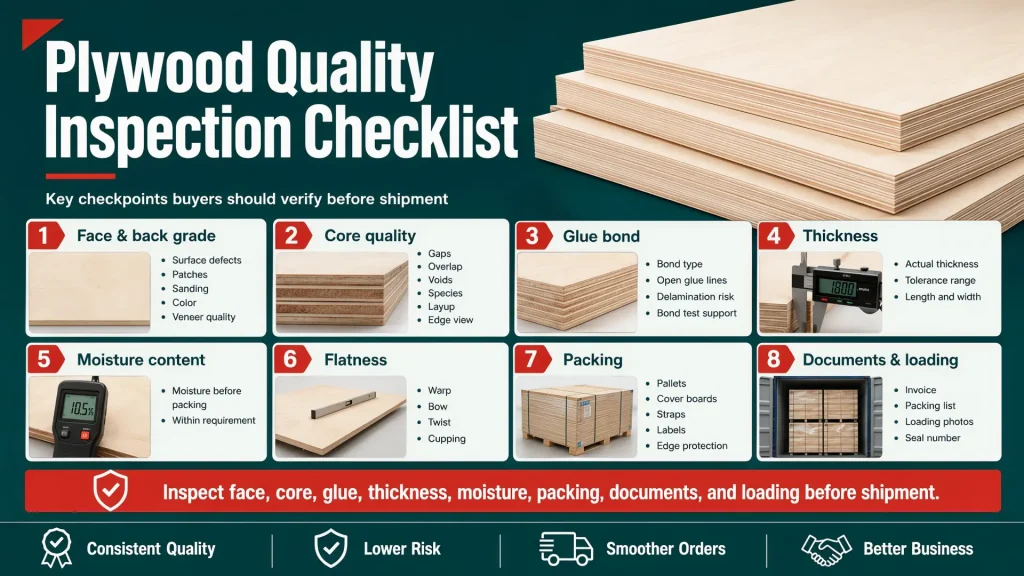
A plywood quality inspection checks whether a panel matches the order before shipment. Buyers should review face and back grade, core gaps, glue bond, thickness tolerance, moisture, flatness, edge quality, packing, labels, documents, and loading photos. These checks reduce claims, delays, and hidden buying risk.
Why Plywood Inspection Matters
Plywood quality can change from order to order if the specification is not clear. Also, two panels with the same size and thickness may perform very differently. One sheet may have a stable core and clean face. Another may have overlap, voids, weak glue, or poor sanding.
For this reason, buyers should set inspection points before production starts. A good inspection plan helps confirm the panel type, face grade, core, glue, thickness, moisture, packing, labels, and documents. As a result, the buyer can reduce disputes after the goods arrive.
For general plywood background, buyers can review APA plywood resources. For responsible sourcing needs, buyers can review FSC chain of custody information.
Main Plywood Quality Inspection Points
A complete inspection should cover both visible and hidden quality. The face may show the first impression, but the core, glue, thickness, and moisture often decide real performance.
| Inspection point | What to check | Why it matters |
|---|---|---|
| Face grade | Surface defects, patches, sanding, color, veneer quality | Affects appearance, finish, resale, and claims |
| Back grade | Back veneer quality, repairs, splits, stain, rough areas | Important when both sides may be seen or used |
| Core quality | Gaps, overlap, voids, species, layup, edge view | Affects strength, screw holding, and cutting result |
| Glue bond | Bond type, delamination risk, test support | Affects moisture resistance and panel life |
| Thickness | Actual thickness and tolerance range | Affects assembly, CNC work, fitting, and resale |
| Moisture | Moisture content before packing | Helps reduce warping, mould, and swelling risk |
| Flatness | Warp, bow, twist, cupping | Affects cutting, stacking, and final use |
| Packing | Pallets, cover boards, straps, marks, labels | Protects panels during shipping and unloading |
Face and Back Inspection
The face and back should match the agreed grade. Buyers should check cracks, open defects, dead knots, large patches, sanding marks, stains, veneer splits, color mismatch, and rough repair work. In addition, the inspection should check whether the better side is packed as agreed.
For furniture and decorative panels, face quality is very important. However, for packing or hidden construction use, the face grade may be less important than core strength and cost. Therefore, the inspection level should match the final use.
| Surface issue | Risk | Buyer action |
|---|---|---|
| Open cracks | Poor finish and claim risk | Set allowed size and quantity |
| Large patches | Uneven appearance | Confirm patch standard and end use |
| Rough sanding | More finishing work | Check sanding level and surface feel |
| Color mismatch | Lower visual value | Define visible face needs clearly |
| Oil stain or dirt | Poor resale and coating issues | Reject or separate affected sheets |
Core Quality and Edge Check
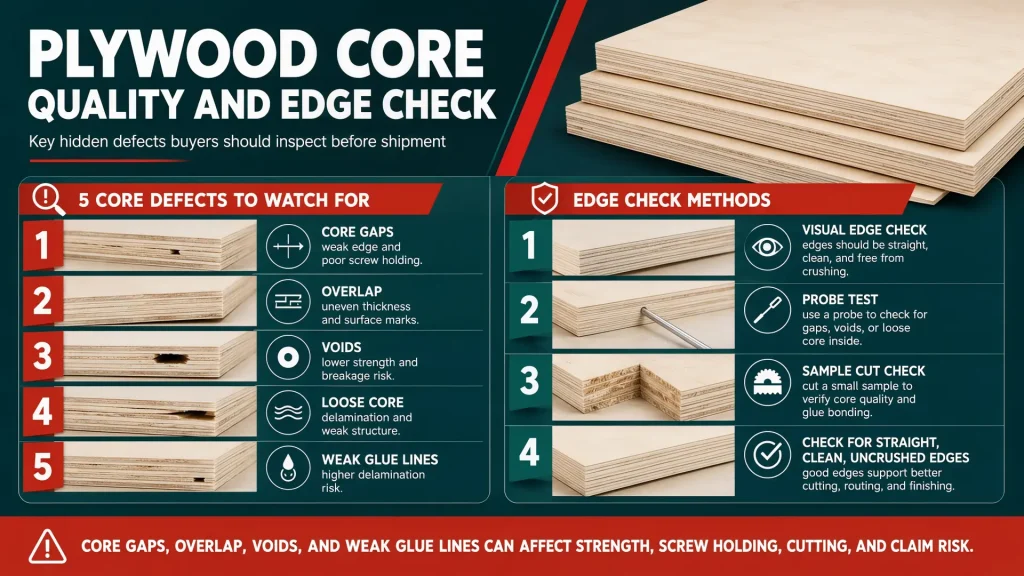
Core defects are one of the biggest hidden risks in plywood orders. A clean surface can hide inner gaps, overlap, weak veneers, or poor layup. Therefore, buyers should inspect panel edges and, when needed, cut sample strips from selected sheets.
Core quality affects screw holding, cutting, bending, weight, and edge banding. It is especially important for furniture, cabinets, shelves, CNC work, formwork, crates, and structural uses.
| Core defect | Possible result | Where it hurts most |
|---|---|---|
| Core gaps | Weak edge, poor screw holding, broken cuts | Furniture, shelves, CNC, edge banding |
| Overlap | Uneven thickness and surface marks | Cabinets, laminated panels, sanding work |
| Loose core | Delamination and weak structure | Formwork, packing, construction, shelves |
| Mixed poor species | Unstable weight and strength | Wholesale resale and repeat production |
| High void rate | Lower strength and higher claim risk | Load bearing and screw fixed parts |
Glue Bond and Delamination Risk
Glue quality is a key part of plywood QC. The correct glue depends on use. MR glue may suit dry indoor panels. WBP or phenolic bond may suit moisture risk, concrete formwork, exterior handling, or tougher project needs.
Before ordering, buyers should confirm the glue type, bond target, and test method if needed. During inspection, they should check open glue lines, edge separation, blistering, and any sign of delamination. In addition, sample testing can support high risk orders.
| Glue check | What to look for | Buyer note |
|---|---|---|
| Open glue line | Visible separation between layers | High risk for delamination |
| Edge separation | Layers lifting at panel edge | Check before packing and loading |
| Blistering | Raised surface areas | May show bonding or moisture issues |
| Wrong glue type | Panel does not match use area | Confirm in purchase order and documents |
| Weak bond after test | Layer failure after water or boil test | Reject or regrade if outside order terms |
Thickness and Size Inspection
Thickness is not only a number on the invoice. Buyers should check actual finished thickness, length, width, squareness, and tolerance. Also, they should confirm the measuring method before inspection starts.
For furniture plants, small thickness changes can affect grooves, hinges, CNC work, edge banding, and assembly. For formwork and construction buyers, wrong thickness can affect stiffness, fixing, and site use.
| Size item | Inspection method | Why it matters |
|---|---|---|
| Length | Measure several sheets from different pallets | Controls cutting plan and resale size |
| Width | Check actual sheet width | Prevents fit and packing issues |
| Thickness | Measure at several points on each sample sheet | Controls assembly and grade claim |
| Squareness | Check diagonal or corner accuracy | Important for furniture and CNC cutting |
| Tolerance | Compare with purchase order range | Reduces disputes after arrival |
Moisture Flatness and Storage Check
Moisture affects plywood shape, weight, and claim risk. High moisture may lead to mould, swelling, warping, and poor bonding in later use. Therefore, buyers should check moisture before packing and confirm that panels are stored in a dry area.
Flatness also matters. Bowed, twisted, or cupped panels can create problems in furniture, cabinets, wall panels, and formwork. As a result, inspection should include stacked panels and loose sheets from different pallets.
Inspection by Plywood Application
Inspection should match the final use. A furniture panel, formwork sheet, packing board, and structural panel need different inspection weight. The table below helps buyers set the right focus.
| Application | Main inspection focus | Common risk |
|---|---|---|
| Furniture and cabinets | Face grade, core gaps, thickness, sanding, moisture | Poor finish, weak screw holding, bad edge banding |
| Concrete formwork | Film surface, WBP bond, core density, edge sealing | Delamination, poor release, short reuse life |
| Packing and crates | Strength, thickness, weight, core, packing | Broken crates, edge failure, load risk |
| Construction panels | Grade, thickness, bond, span use, documents | Wrong panel for site use or local rules |
| Marine or wet area use | Bond, veneer quality, core gaps, edge plan | Water damage, weak core, false grade claim |
| Decorative panels | Face species, color, sanding, coating, packing | Color claims, scratches, surface defects |
Pre Shipment Inspection Checklist
A pre shipment check should be done before the container is loaded. This gives the buyer time to correct, rework, replace, or separate problem sheets before freight cost is spent.
| Stage | What to confirm | Proof to keep |
|---|---|---|
| Before production | Specification, sample, grade, glue, tolerance, packing | Signed PI, sample record, order sheet |
| During production | Core, glue spread, pressing, sanding, grading | Production photos and QC notes |
| Before packing | Face grade, core check, moisture, size, flatness | Inspection photos and measurement record |
| After packing | Pallet marks, straps, cover board, labels | Packing photos and pallet list |
| During loading | Container condition, loading order, pallet count | Container photos and loading report |
Packing and Container Loading Inspection
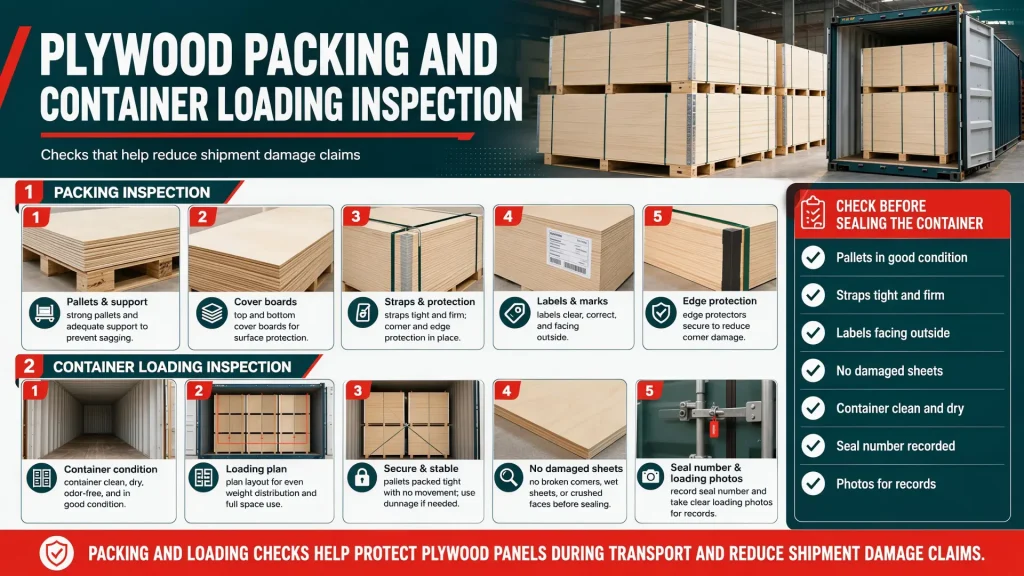
Good panels can still arrive damaged if packing is weak. Buyers should check pallet strength, cover boards, edge guards, straps, labels, moisture cover, and container condition. Also, loading photos should show the container number, pallet layout, and final door close.
Before loading, inspect the container for holes, water marks, odor, floor damage, and dirty walls. Then confirm the pallet count, gross weight, marks, and seal number. These simple checks help reduce transport claims.
Documents Buyers Should Check
Documents are part of plywood quality control because they prove what was ordered, packed, shipped, and certified. Missing or unclear documents can delay customs, resale, or customer approval.
| Document | What to check | Risk if wrong |
|---|---|---|
| Commercial invoice | Product name, quantity, value, buyer, seller | Customs delay or payment dispute |
| Packing list | Pallet count, sheet count, size, gross weight | Unloading and warehouse errors |
| Certificate | Product scope, factory, batch, chain claim | Certificate may not match the order |
| Data sheet | Glue, core, grade, size, use direction | Wrong resale or project use |
| Loading photos | Container number, seal, pallet layout | Harder to prove shipment condition |
Common Plywood Defects and Buying Risks
Many plywood claims come from a few repeated issues. Buyers can reduce risk by naming these points in the order and checking them before shipment.
- Face cracks, stains, rough patches, or sanding marks
- Core gaps, overlap, voids, or weak inner veneers
- Wrong glue type for the use area
- Delamination at edges or corners
- Thickness outside the agreed tolerance
- High moisture, mould risk, or poor storage
- Warping, bowing, twisting, or cupping
- Weak pallet packing or missing labels
- Documents that do not match the order
In short, inspection should focus on the defects that create cost after arrival.
Buyer Checklist for Plywood Inspection
Use this checklist before approving shipment. It helps the buyer compare the order against the agreed specification.
| Checklist item | Pass question | Action if not clear |
|---|---|---|
| Product type | Does it match the order use? | Confirm with supplier before loading |
| Face and back grade | Do both sides match the agreed grade? | Separate or regrade problem sheets |
| Core quality | Are gaps, overlap, and voids within limit? | Cut sample strips if needed |
| Glue bond | Does the bond suit the use area? | Request test proof or sample testing |
| Thickness | Is actual thickness within tolerance? | Record measurements by pallet |
| Moisture and flatness | Are sheets dry, flat, and clean? | Hold, dry, rework, or reject if needed |
| Packing | Are pallets strong and well protected? | Improve packing before loading |
| Documents | Do documents match the goods? | Correct before shipment |
Frequently Asked Questions About Plywood Quality Inspection
How do you inspect plywood quality?
Inspect plywood by checking face grade, back grade, core gaps, glue bond, thickness, moisture, flatness, edge quality, packing, labels, documents, and loading photos.
What are common plywood defects?
Common defects include face cracks, core gaps, veneer overlap, delamination, wrong thickness, high moisture, warping, sanding marks, weak packing, and wrong labels.
How do buyers check plywood core quality?
Buyers can check panel edges and cut sample strips. They should look for gaps, overlap, loose core, mixed poor veneers, and weak glue lines.
Why is plywood thickness inspection important?
Thickness affects fitting, CNC work, edge banding, stiffness, load use, resale, and customer claims. Buyers should check actual thickness against the agreed tolerance.
When should plywood inspection happen?
Inspection should happen before production, during production, before packing, after packing, and during loading for high risk or large volume orders.
What should be checked before container loading?
Check pallet count, marks, labels, straps, cover boards, container condition, loading order, container number, seal number, and final loading photos.
Build Inspection Into the Buying Process
This plywood quality inspection guide gives buyers a clear way to reduce risk before shipment. The best result comes from setting quality terms before production and checking the order before loading.
Before placing an order, buyers should confirm the product type, grade, core, glue, thickness, tolerance, moisture limit, packing, documents, and loading proof. Once these points are clear, ROC can help match the right plywood quality control plan for furniture, formwork, construction, packing, marine, decorative, or wholesale panel supply.
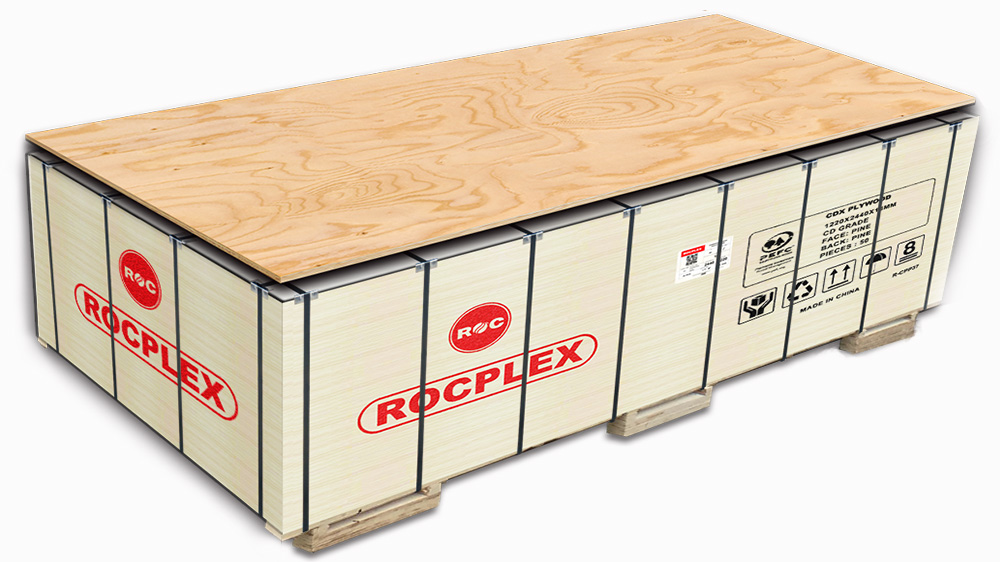
Plywood
Plywood Supplier and Manufacturer for Global Buyers
Plywood is an engineered wood panel made from thin veneer layers bonded together under heat and pressure. Because the grain direction is crossed between layers, the panel gains better strength, balance, and stable size. Buyers use this material for construction, furniture, formwork, packaging, flooring, roofing, wall panels, and industrial projects.
ROCPLY and ROCPLEX supply plywood for importers, wholesalers, builders, furniture factories, and project buyers who need clear specs and steady export support. In addition, buyers can choose size, thickness, core type, glue bond, face grade, surface finish, emission class, certificate needs, packing method, and container loading plan before production.
What Is Plywood
Plywood is a wood based sheet made by gluing several veneer layers into one strong board. This cross layered build helps reduce movement, improve screw holding, and support better panel strength than many single direction wood sheets. Therefore, it has become one of the most used engineered wood products in building, furniture, transport, and export packing.
According to APA The Engineered Wood Association, plywood is made from cross laminated veneer bonded with strong adhesives. This gives the panel useful strength, stable form, and a wide choice of grades for many end uses.
ROCPLY Plywood for Wholesale and Project Supply
ROCPLY plywood is made for buyers who need more than a low sheet price. Long term importers also need stable cores, accurate thickness, clean faces, strong bonding, controlled moisture, safe packing, and clear documents. As a result, the right panel can reduce cutting waste, site complaints, and hidden project costs.
Xuzhou ROC International Trading Co., Ltd. supports product selection, quality checks, export packing, and shipment documents for wood panel buyers. The wider ROC product range also includes MDF, OSB, particle board, LVL, H20 beams, formwork panels, and I joists. For this reason, buyers can combine several product lines in one sourcing plan.
Main Types of Plywood Buyers Choose
Different jobs need different plywood. For example, a furniture factory may need a smooth face and stable core. A concrete contractor may need film faced sheets with better release and reuse. Meanwhile, a packing buyer may focus on weight, cost, and loading volume.
| Panel type | Main use | Buyer focus |
|---|---|---|
| Commercial plywood | Furniture, cabinets, interiors, general use | Face grade, core quality, sanding, thickness |
| Film faced plywood | Concrete formwork and shuttering | Film weight, bonding, edge sealing, reuse |
| Marine plywood | Wet areas, boat parts, outdoor projects | Core gaps, glue bond, veneer quality |
| Birch plywood | Premium furniture, CNC, strong panels | Density, strength, surface quality |
| Poplar plywood | Furniture, packing, light panels | Weight, price, cutting quality |
| Structural plywood | Floors, walls, roofs, structural work | Grade, strength, standard, span use |
| Packing plywood | Crates, pallets, export packing | Cost, loading volume, strength, stability |
| Flexible plywood | Curved furniture and interior shapes | Bending radius, face quality, easy forming |
Sheet Sizes and Thickness Options
Standard sheets are often supplied in 2440 × 1220 mm or 4 × 8 ft sizes. However, other sizes can be made for local markets, formwork systems, furniture plants, and packing lines. Common thickness options include 3 mm, 6 mm, 9 mm, 12 mm, 15 mm, 18 mm, 21 mm, and 25 mm.
Thickness should match the final use. Thin sheets suit backs, linings, and curved work. Medium boards work well for furniture parts and interior panels. Thicker plywood is often used for flooring, crates, formwork, and building work where stiffness matters.
How Buyers Choose the Right Panel
The best choice is not always the most costly sheet. Instead, buyers should match the board to the job, local rules, expected life, and target price. This simple check helps avoid both over buying and under buying.
| Application | Recommended option | Key buying check |
|---|---|---|
| Furniture and cabinets | Commercial, birch, or prefinished panels | Flatness, sanding, face grade, low emission option |
| Concrete formwork | Film faced, formwork, or plastic faced panels | Film surface, WBP bond, edge sealing, reuse cycles |
| Wet or outdoor areas | Marine, exterior, or sealed panels | Glue type, core gap, face quality, sealed edges |
| Building work | Structural or hardwood panels | Strength grade, thickness, standard, fastener holding |
| Packaging and crates | Packing or poplar panels | Cost, strength, weight, export packing needs |
| Decorative interiors | UV prefinished or fancy panels | Surface finish, color match, scratch resistance |
Core Glue and Face Grade Matter
Core quality is one of the main buying points. A good core helps screw holding, edge quality, cutting stability, and panel strength. Common core choices include poplar, eucalyptus, birch, hardwood, combi core, and pine. Each choice gives a different balance of weight, strength, cost, and surface result.
Glue type also changes where the board can be used. MR glue is common for dry indoor use. WBP and phenolic bonds are better for panels that need more moisture resistance. Therefore, buyers should confirm glue type, emission level, test needs, and the climate where the sheet will be used.
Plywood Compared With MDF OSB and Particle Board
Buyers often compare plywood with MDF, OSB, and particle board before placing an order. Each material has a clear role. Plywood is often chosen when strength, screw holding, edge quality, and wide use matter. MDF gives a smoother paint base. OSB is common for sheathing and subfloor work. Particle board is often used in cost controlled furniture and melamine boards.
| Material | Best fit | Main limit |
|---|---|---|
| Plywood | Furniture, building, formwork, packing, industrial panels | Quality changes by core, glue, and face grade |
| MDF | Painted furniture, cabinet doors, interior panels | Lower screw holding than good veneer panels in many uses |
| OSB | Roof, wall, subfloor, and sheathing work | Less suitable for fine furniture faces |
| Particle board | Melamine furniture, shelves, low cost interior panels | Lower edge strength and moisture resistance |
Certificate and Export Quality Checks
Professional buyers should confirm documents and quality points before shipment. Key checks include product specs, packing list, invoice, bill of lading details, certificate request, emission class, moisture content, thickness tolerance, face grade, glue bond, edge condition, and packing strength.
For sustainable sourcing, buyers may ask for FSC chain of custody support. FSC chain of custody certification helps track certified forest based material through the supply chain. Also, buyers can review technical guidance from APA plywood resources and compare it with local market rules.
Why Global Buyers Work With ROCPLY and ROCPLEX
Global buyers need stable supply, not only a low price. ROC supports buyers with product matching, sample review, spec control, quality checks, export packing, container loading, and after sales contact. In addition, the team can help buyers compare panel choices for furniture, building, formwork, and packing use.
Because ROC works across many engineered wood products, buyers can build a broader range from one source. This is useful for importers, distributors, and project suppliers that want fewer supplier risks and more stable long term supply.
Price Factors Buyers Should Compare
Panel price depends on veneer species, core grade, glue type, face grade, thickness, size, moisture control, sanding quality, surface finish, certificate needs, packing, order volume, and shipping market. A cheap sheet may cost more if it causes more waste, warping, delamination, surface defects, or buyer claims.
When asking for a quote, buyers should share the target use, size, thickness, grade, quantity, destination port, certificate needs, packing method, and quality target. This helps ROC recommend the right board and avoid the wrong spec.
Frequently Asked Questions About Plywood
What is plywood used for?
Plywood is used for furniture, cabinets, flooring, roofing, wall panels, concrete formwork, packing, vehicle floors, shopfitting, and industrial panels. The right type depends on strength, surface, glue, thickness, and exposure.
What is the best plywood for furniture?
Commercial, birch, hardwood, and UV prefinished panels are common choices for furniture. Buyers should check face grade, core quality, sanding, flatness, thickness tolerance, and emission class.
Is plywood waterproof?
Not all plywood is waterproof. Moisture resistance depends on glue type, veneer quality, core gaps, surface treatment, and edge sealing. Marine, film faced, and well sealed exterior panels offer better wet use results.
What is the difference between plywood and MDF?
Plywood is made from veneer layers. MDF is made from wood fibers. Veneer panels often offer better strength, screw holding, and edge quality. MDF gives a smoother surface for paint and fine machining.
What is the difference between plywood and OSB?
Plywood is made from veneer sheets. OSB is made from oriented wood strands. OSB is often used for sheathing and subfloors, while veneer panels are widely used for furniture, formwork, packing, and building work.
How do I choose sheet thickness?
Choose thickness by load, span, fixing method, final use, and local rules. Thin sheets suit backs and lining. Medium boards fit furniture. Thicker panels suit floors, formwork, crates, and structural work.
Can ROC supply wholesale orders?
Yes. ROC supplies plywood and related timber products for wholesalers, importers, construction suppliers, furniture factories, and project buyers. The team can support samples, packing advice, and container loading.
What details should buyers send for a quote?
Buyers should send panel type, size, thickness, core, glue, face grade, quantity, destination port, certificate needs, use, and packing request. Clear details help the supplier quote the right product.
Request a Plywood Quote From ROC
If you need plywood for wholesale, building, furniture, formwork, packing, or industrial supply, send your spec to ROC. Our team can help match the right product, confirm details, prepare export packing, and support steady long term supply for your market.
Post time: Jun-29-2026