

Many buyers think about price first. However, site teams live with the result later. That is why scaffold boards matter more than many people think. A board may look simple, yet it affects safety, job speed, crew comfort, and repeat use. On ROC, scaffold boards sit next to LVL beams and formwork products, so buyers can look at the full site support system instead of one item alone.
This topic also brings strong search traffic. Buyers often ask clear questions before they place an order. Which scaffold boards last longer? Type fits my market rules? Boards give better value over many uses? Which supplier can ship steady quality in repeat orders? Those searches often come from contractors, rental firms, distributors, and import buyers who are already close to a decision.
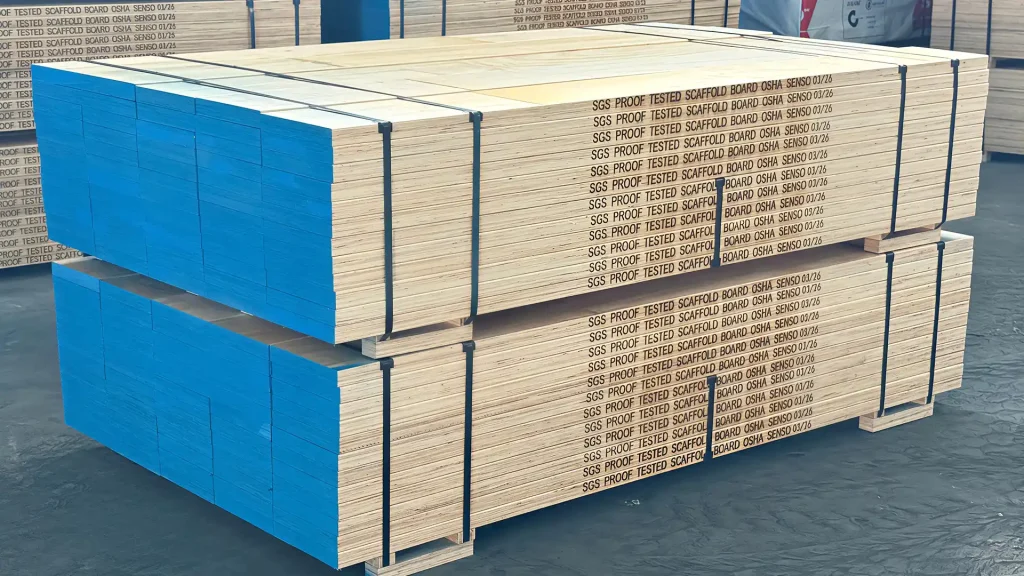
Why the wrong scaffold boards slows down a job
Most scaffold problems do not start with the frame. They start with the working deck. If the board bends too much, shifts, cracks, or wears out too fast, the whole platform feels worse. Then crews slow down. Supervisors step in. Small issues turn into job delays. So the board choice deserves real attention at the buying stage.
Buyers often ask for the lowest price first. Yet that is not the best first question. A better question is this: which scaffold boards keep a platform steady over time? In real work, a cheap board can cost more when crews need early replacement, extra checks, or shorter service life. For that reason, smart buyers compare total value, not just unit price.
The main scaffold boards types buyers compare
Most buyers compare three main options. First, they look at traditional solid timber boards. Next, they consider standard graded scaffold planks made for a local rule set. Then, many buyers look at engineered LVL scaffold boards for more even strength and cleaner sizing. Each option has a place, so the right choice depends on the job, the market, and the reuse target.
| Option | What buyers like | Main tradeoff | Best fit |
|---|---|---|---|
| Traditional timber boards | Simple, familiar, and easy to source in some regions | Natural wood can vary more from board to board | Short-term local jobs |
| Standard graded scaffold planks | Better match for local site rules and marked use | Quality still depends on supplier control | Markets with clear local rules |
| Engineered LVL scaffold boards | More even strength, cleaner finish, and steadier repeat supply | Buyers must match the board to the right span and market rule | Contractors, rental fleets, and import buyers |
On ROC, SENSOplank scaffold boards target buyers who want kiln-dried timber, anti-slip surface options, custom sizing, and steady production. That matters because many large buyers do not want random supply. Instead, they want boards that look consistent and work the same way from one shipment to the next.
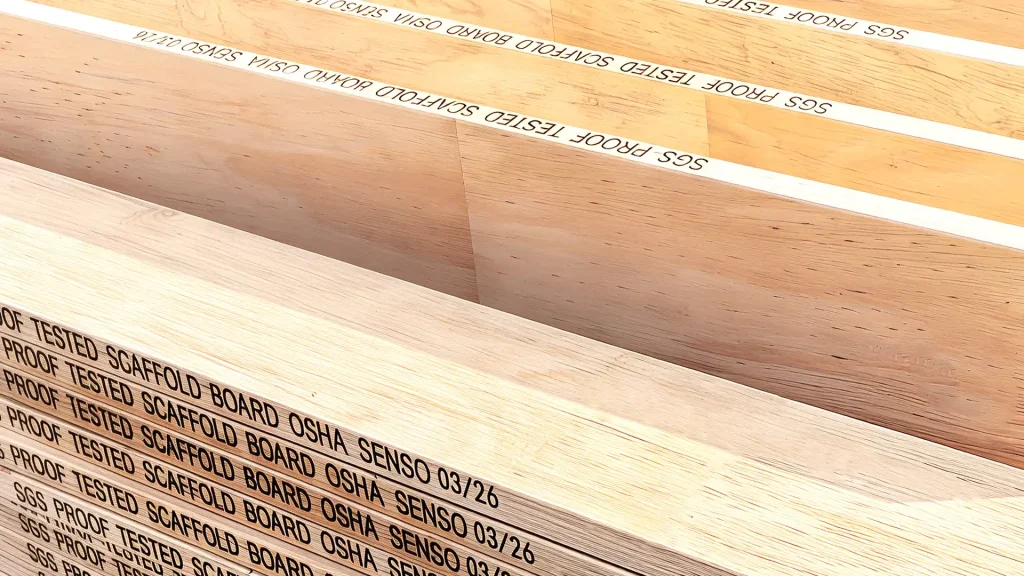
Check the rule set before you check the scaffold boards price
Before you compare quotes, check which rule set matters in your market. That step saves time and cuts risk. A board that suits one country may not suit another. So buyers should ask early which standard, span, marking, and load use apply to the project. That gives the whole buying process a better start.
In the United States, OSHA sets core scaffold platform rules. In Australia and New Zealand, buyers often work with AS NZS 1577. In the UK, many buyers know BS 2482 for timber scaffold boards. These systems are not the same. Because of that, one label should never act as a blanket answer for every market. Buyers need a clear match between the board and the target job.
- Ask which standard the board meets.
- Ask what span the board is made for.
- Ask how the supplier marks each batch.
- Ask for moisture range and storage guidance.
- Ask whether the same build can stay stable in repeat orders.
This is where good product pages help. On ROC, SENSOplank scaffold boards show useful details such as moisture content at dispatch, adhesive type, density range, storage notes, and certificate options. That information helps search visibility. More importantly, it also helps buyers ask better questions before they place an order.
A low board price looks good on paper. However, better scaffold boards often save more money on the job.
Why many buyers move to LVL scaffold boards
Many buyers choose LVL because they want fewer surprises. They want boards with more even strength, cleaner edges, better shape control, and steadier repeat quality. That need grows fast when the buyer runs rental stock, large site programs, or export orders. In those cases, small differences between boards can create bigger problems later.
ROC places SENSOplank inside a wider engineered timber range. So a buyer who starts with scaffold boards can also review Structural LVL Beams SENSOframe, LVL Laminated Veneer Lumber, and ROCPLEX H20 Slab Formwork Beams. That structure helps conversion because many project buyers need more than one item. They often want one supplier that understands site timber systems as a whole.
There is another reason as well. Buyers do not just buy a board. They buy handling ease, expected life, and supply confidence. If the supplier can hold size, finish, and build quality across repeat orders, the buyer gains more control over site use and stock planning. In short, steady supply often matters just as much as the first shipment.
A simple scaffold boards supplier checklist before you place the order
Good scaffold boards do not come from a nice photo alone. They come from a supplier that answers direct questions with clear facts. Can the supplier state the target market? Can they explain the board size range? Can they show how they control moisture, bonding, marking, and storage? Can they support repeat volume if the next order grows? These points tell you more than a low quote ever will.
- Confirm the market and rule set first.
- Match the board to span and working load.
- Check end marks, batch marks, and edge condition.
- Ask for real photos, not only a brochure image.
- Review storage advice before delivery.
- Check whether FSC or PEFC chain of custody is needed.
- Try a sample or trial shipment if the spec is new to you.
Also, think about the next step after the quote. A contractor may need a fast data sheet. A rental firm may need steady stock with clean sizing. An importer may need one mixed container with scaffold boards, LVL, and formwork items. So the best call to action is not just “ask for a price.” It is “send your market, size, span, and volume so we can match the right board.”
Quick answers scaffold boards buyers often need
Scaffold boards form the working deck on scaffolding. They give crews a place to stand, move, and handle tools and materials at height.
No. They differ in material, grade, size, rule set, span use, and supply quality.
They want more even strength, cleaner sizing, and steadier repeat quality across larger orders.
Ask about the standard, span, size, moisture, batch marks, storage, and repeat supply ability.
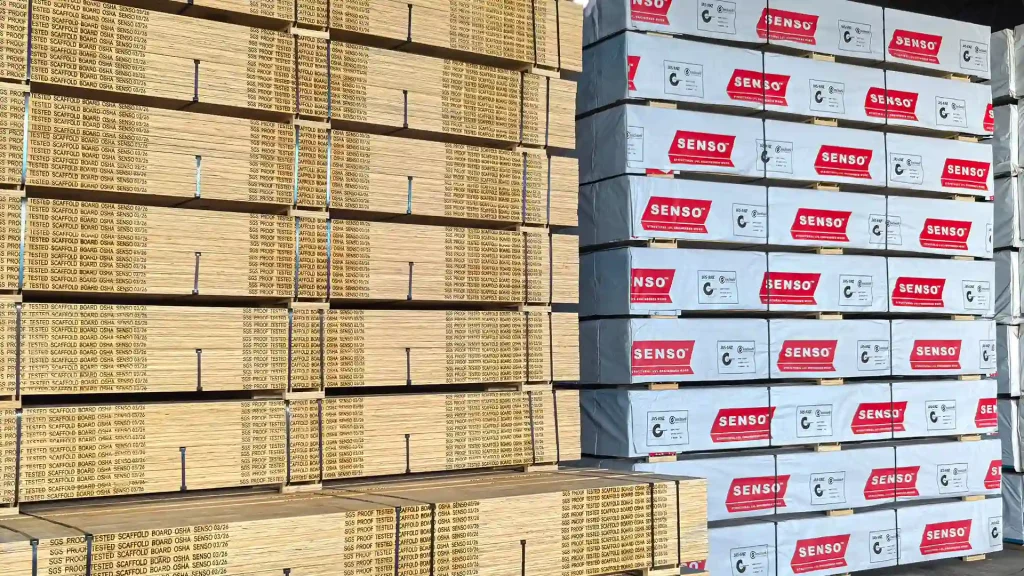
The practical next step for scaffold boards buyers
If your team buys for real site use, do not start with price alone. First, check the platform need. Next, match the board to the market rule, span, and reuse target. Then compare landed value. That gives you a better buying result. On ROC, buyers can review SENSOplank Scaffold Boards and related products in one place. So if you want a faster quote with fewer mistakes, send your target market, board size, required standard, and expected volume first. That simple step leads to better quotes and fewer wrong shipments.
Reference standards and industry sources: OSHA 29 CFR 1926.451, Standards Australia AS NZS 1577, BS 2482 timber scaffold boards.
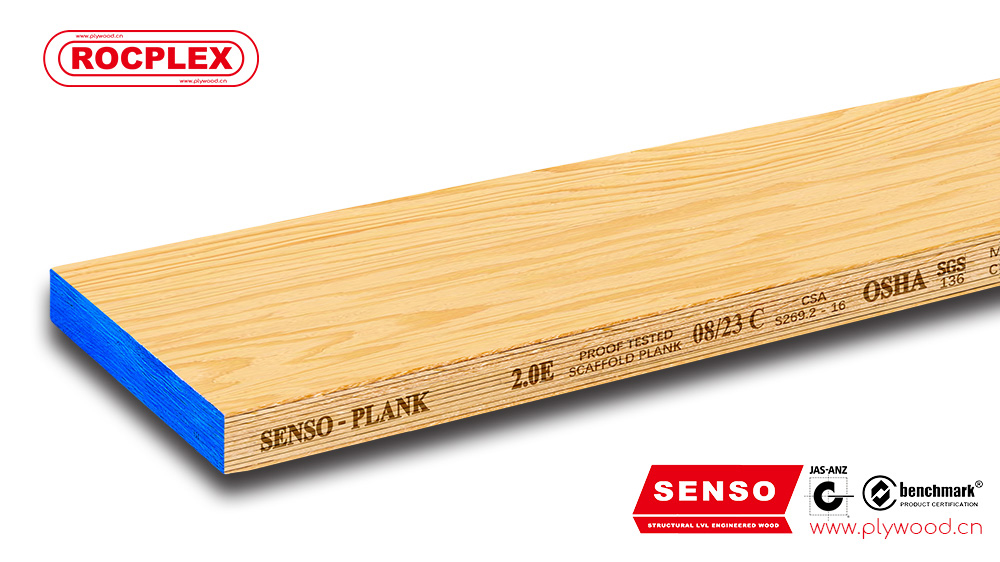
Scaffold Boards – SENSOplank
Highlight SENSO LVL Scaffold Boards as OSHA-compliant, CSA-certified, proof-tested, and Benchmark-certified planks ideal for scaffolding applications. Emphasize features like structural strength, engineered laminated veneer lumber, blue sealed ends, and durability for construction safety standards.
Post time: Mar-30-2026