

The first concrete pour tells you very quickly whether the panel choice was smart. If the face releases cleanly, the crew moves faster. If the board stays flat, the slab line stays tighter. Or the surface breaks down too early, the saving on sheet price disappears at once. That is why film faced plywood is not just another board on a quote. It sits at the center of formwork speed, finish quality, and reuse value. On ROC, ROCPLEX Film Faced Plywood is positioned as a formwork panel with a smooth phenolic film surface, moisture resistance, abrasion resistance, and hardwood or birch core options for demanding construction use.
This keyword also sits close to real buying intent. Contractors search it when they need stable formwork panels for walls, columns, or slabs. Distributors search it when they need a dependable formwork line with repeat demand. Import buyers search it when they want a practical balance between cost, reuse, and concrete finish. So the page should not open with a textbook definition. It should help the buyer connect panel choice to site outcome.
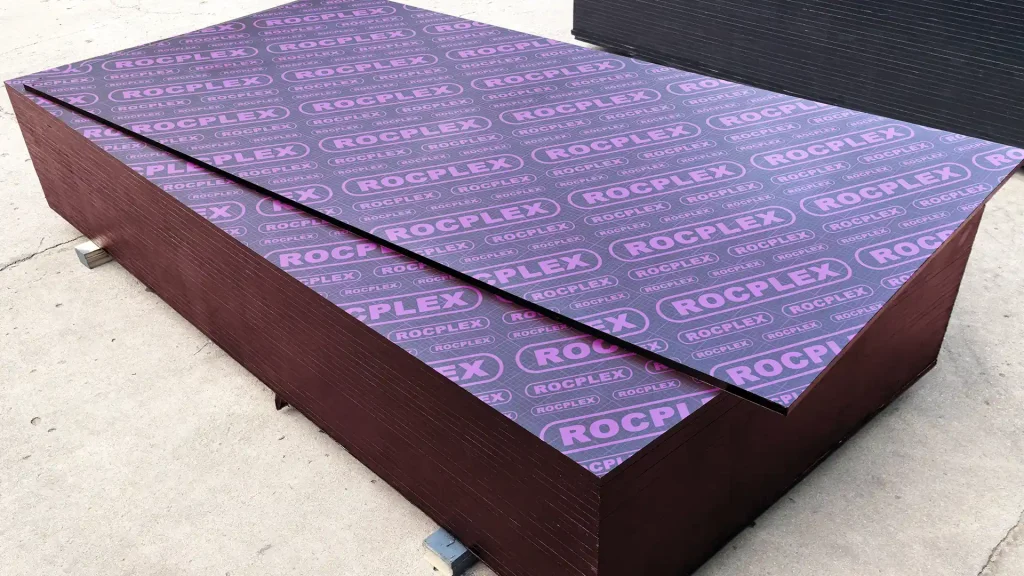
Film faced plywood works hardest when the pour gets demanding
A good formwork panel needs to do several jobs at once. It needs to hold shape under load. Needs to resist water during site handling. It needs to release cleanly enough to support a better concrete finish. It also needs to stay useful after more than one cycle. The ROCPLEX Film Faced Plywood page leans on exactly those points. It describes a phenolic film overlay, smooth concrete forming face, strong cross laminated hardwood veneer core, and suitability for harsh construction conditions. It also lists common 2440 × 1220 panels from 4 mm up to 28 mm.
That matters because slab work, wall pours, and columns do not stress a panel in the same way. Slabs reward flatness and handling speed. Wall forms punish weak edges and inconsistent faces. Columns expose every small issue in release and corner control. So the smartest buyers do not ask only for thickness. They ask what kind of pour the panel has to survive. That is where better buying starts.
Project type changes the best film faced plywood route
ROCPLEX does not present film faced plywood as a single isolated line. It places it inside a wider formwork family that includes standard film faced plywood, Formply, HDO and MDO Plyform, PP plastic faced plywood, Xlife Plastic Formwork Plywood, and H20 Slab Formwork Beams. That is useful because the best panel often changes with the project. A general contractor may want standard phenolic film faced plywood for routine wall and slab work. A buyer working to Australian formwork requirements may move toward Formply. A project that needs very high reuse may justify a plastic faced route instead.
The same logic applies on many sites. Basic film faced plywood can work well for standard pours. However, a higher end panel may be the better buy when the finish target is stricter, the job cycle is longer, or the market asks for a specific route. So buyers should compare the project first, then compare the panel.
| Panel route | Best fit | Main advantage | When buyers usually move up |
|---|---|---|---|
| Standard Film Faced Plywood | Routine wall, slab, and column forming | Strong balance of cost, smooth face, and reuse | When finish, certification, or reuse targets get stricter |
| Formply | Australia focused formwork buying | Market specific route for heavy duty formwork | When the project or buyer needs that route |
| HDO or MDO Plyform | Commercial and infrastructure forming | Overlay consistency and better finish control | When a smoother surface or longer reuse matters |
| Xlife or PP Plastic Faced Plywood | High cycle and rough use sites | Plastic faced durability and higher reuse potential | When the project needs longer life and lower cycle cost |
That table matters because many buyers compare only like for like quotes. The better comparison is between job requirement and panel route.
Film face plywood reuse does not come from the film alone
Buyers often talk about reuse as if it comes only from the film surface. In practice, reuse depends on the full system. The film matters, but so do the core, the adhesive, the edge condition, the stripping method, and the jobsite handling. The ROCPLEX Film Faced Plywood page emphasizes the phenolic film, robust core structure, and multiple use value. The FAQ page also frames film faced plywood as a panel designed for moisture resistance and repeat use in formwork and shuttering work.
That is also why higher end options exist on the same site. Xlife Plastic Formwork Plywood is presented as a heavier duty solution with a waterproof plastic coating over a birch core and a much higher reuse claim. Even when those premium routes are not needed, they help buyers understand a key point. Reuse is an economic decision, not just a technical one.
A low opening price can still become an expensive panel if the face, edge, and reuse life all fall short at the same time.
Concrete finish quality starts before film face plywood reaches site
Many teams talk about concrete finish as if it starts at the pour. In reality, it starts when the panel is chosen. The standard film faced page on ROCPLEX puts strong emphasis on a smooth and even surface for cleaner concrete results. The site also uses that same finish logic on its HDO and MDO routes, where overlay quality is part of the value story.
This is where many wrong orders begin. The buyer wants better finish but buys only on price. Or the buyer wants more cycles but ignores the panel face and the pour program. A better article should make that trade off visible because it pulls in readers who are closer to a real purchase.
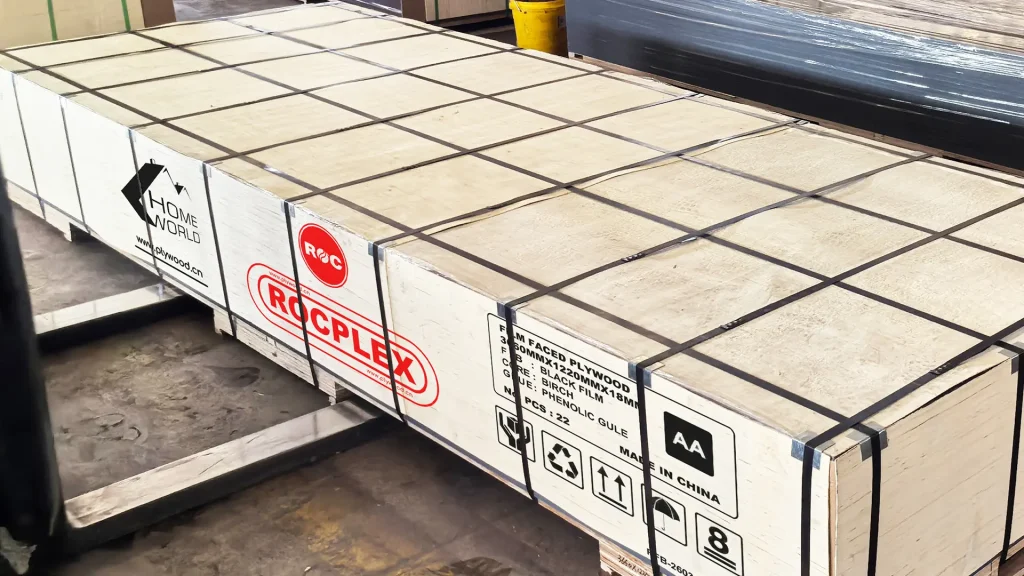
Good film faced plywood enquiries are short but precise
FAQ tells buyers to send product type, size, quantity, and delivery location when requesting a quote. For film faced plywood, strong enquiries need a little more than that. Buyers should also state the type of pour, the desired concrete finish, the target market, the expected reuse goal, and whether standard film faced plywood, formply, or a higher cycle plastic faced route is under consideration. That shortens the path to the right quote.
- State slab, wall, column, or mixed use first
- State panel size and thickness next
- State the target market and any required standard
- State the finish expectation for the concrete face
- State the expected reuse target
- State whether edge sealing or higher cycle options matter
- Ask whether the same supplier can support H20 beams or related formwork lines
This checklist also fits how ROCPLEX is built to convert. The site presents ROC as a manufacturer and wholesaler across plywood, formwork panels, LVL beams, MDF, and OSB. It also gives direct enquiry paths through the FAQ and homepage contact details. That wider supply story matters because many construction buyers do not want one board. They want a dependable formwork package.
Buyers who want a broader sourcing path can move from Film Faced Plywood to Formwork Plywood, Formply, and H20 Slab Formwork Beams without leaving the site. That helps both enquiry quality and internal link strength.
Film faced plywood questions buyers ask most
What is film faced plywood used for
Film faced plywood is mainly used for concrete formwork and shuttering because its film surface helps produce a smoother concrete finish and resists moisture during site use. It is also used in some industrial applications such as vehicle bodies and container floors.
Is film face plywood waterproof
Film faced plywood is highly moisture resistant because the phenolic or melamine film helps act as a barrier in wet conditions. However, correct edge sealing and site handling still matter.
When is standard film face plywood enough
It is often enough for routine wall, slab, and column forming where buyers want a practical balance between cost and reuse. Buyers usually move up when they need stricter standards, cleaner finish control, or much longer cycle life.
What should a first quote request include
A strong first request should include project type, panel size, thickness, target market, finish target, and expected reuse goal.
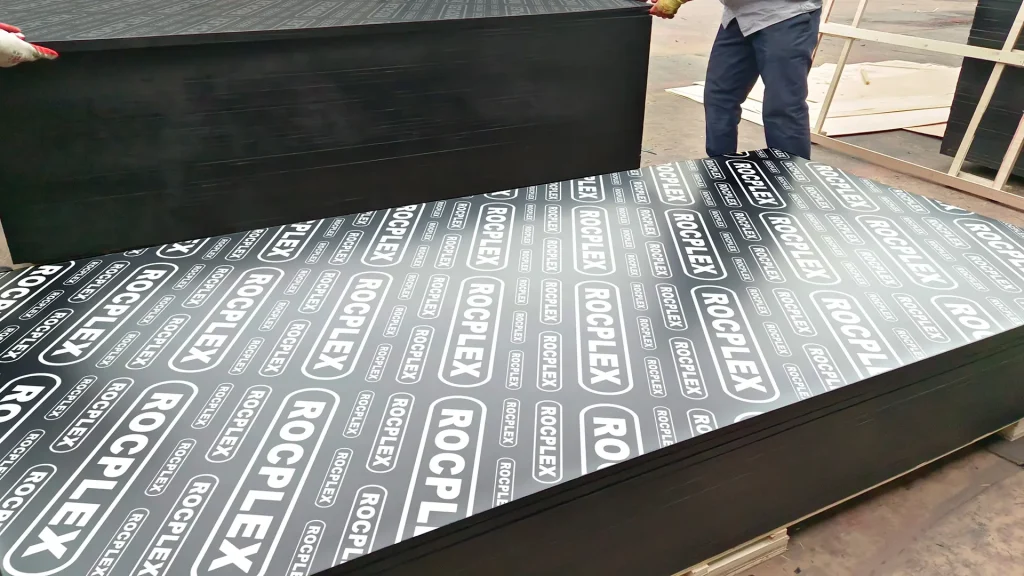
The best next step is to match the pour before the quote
If the goal is more traffic and more real leads, the close should stay practical. Start with the pour plan, not the cheapest sheet. Then match the panel to the finish target, reuse goal, and market route. After that, compare price. Buyers who want to move deeper into ROCPLEX can begin with Film Faced Plywood, then review Formwork Plywood, Formply, Xlife Plastic Formwork Plywood, or H20 Slab Formwork Beams depending on the job. That buying path feels closer to the way real concrete work is planned, and it is more likely to turn search traffic into serious enquiries.
Reference sources: APA Concrete Form Panels, APA Overlaid Panels HDO and MDO, and FSC Chain of Custody Certification.
Post time: Apr-10-2026