

What usually goes wrong first with a shuttering ply board? It is rarely the sales pitch. The trouble starts after the pour, when the face marks, the edge pulls water, or the board moves more than the crew expected. Buyers who search this term are not looking for a simple definition. They want a shuttering ply board that helps them pour faster, strip cleaner, and reuse with less risk.
That is why ROCPLEX 3 Ply Yellow Formwork Panels deserve close attention. They are sold for concrete formwork in 21 mm and 27 mm thicknesses, with a dense double-sided resin face, a lightweight radiata pine and spruce core, waterproof bonding, and optional edge sealing. This makes the shuttering ply board more than a painted board with a construction label. It makes it a practical answer to the real questions buyers ask before they place an order.
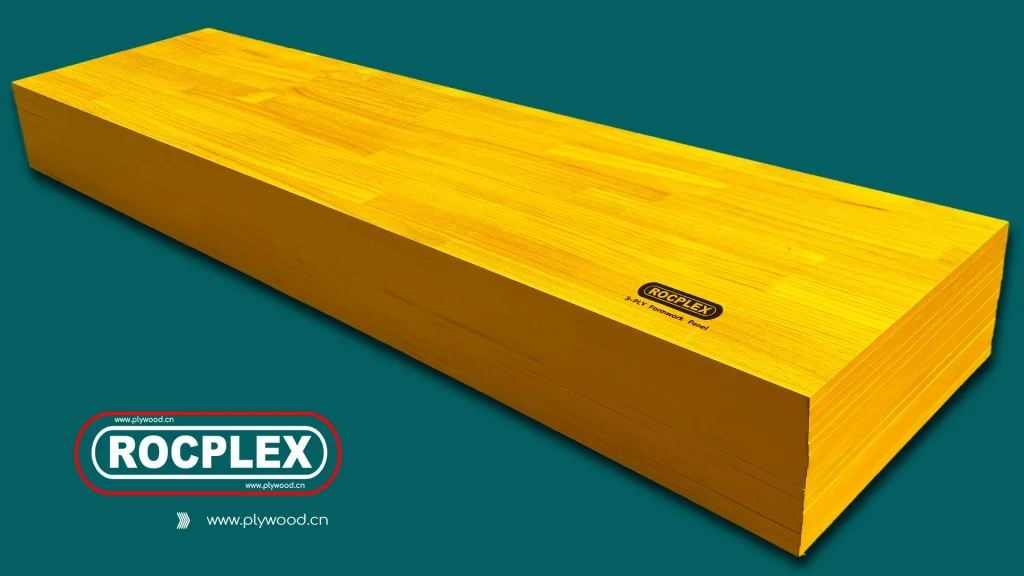
A real shuttering ply board form panel should answer harder questions than a lookalike sheet can
A good shuttering ply board needs to do more than survive one pour. It needs to resist wet concrete, strip cleanly, hold shape, and stay serviceable through repeat use. That is why buyers should separate a true form panel from a cosmetic substitute. A board can look right on day one and still fail quickly if the face is weak, the edge is open, or the bond system is not made for exterior wet use.
This distinction is not just marketing language. APA notes that the plywood industry makes a special product called Plyform for general concrete forming, and that overlaid panels such as MDO and HDO are only form panels when they are designated Concrete Form. That is a useful buying filter. If the supplier cannot clearly explain the face system, bond class, and intended formwork use, the board may only look the part.
- Check what face system the board uses
- Check which wet-use bond language the supplier gives
- Check whether edge sealing is part of the offer
- Check whether the board is sold for real concrete formwork use
- Check whether the supplier explains storage and release-agent practice
Reuse value is real only when the site routine protects shuttering ply board
One of the first questions experienced buyers ask is simple. How many cycles can the board deliver in real site conditions? The weak answer is one hard number with no conditions. The better answer links cycle life to face durability, release-agent practice, edge protection, stripping method, and storage between pours. The ROCPLEX formwork product page handles this more carefully. It says the yellow panel can reach up to 40 cycles under optimal conditions.
That wording is better because it reflects how formwork really works. A board does not age only because of concrete contact. It ages because of scraping, poor stacking, rough stripping, dirty faces, and unsealed edges. This is why cycle count should be treated as usable service life, not as a blind headline promise. Buyers who think in cost per pour usually make better choices than buyers who only compare shuttering ply board price.
The same logic appears in the APA concrete forming guide, which ties reuse outcomes to panel type, overlay quality, maintenance, and handling routine rather than one universal number.
Wet alkaline concrete tests the bond line before the shuttering ply board looks old
Fresh concrete is wet, abrasive, and alkaline. So the right technical question is not whether a board is called waterproof in a catalog. The better question is whether the adhesive system can resist wet alkaline concrete exposure and repeated wet-dry cycles. On the ROCPLEX page, the panel is described with phenolic resin glue bonding that is boil-resistant, alkali-resistant, water-resistant, and weather-resistant.
The product page also points to EN 314-2 Service Class 3, DIN 68705 BFU 100, and BS 6566 WBP. That matters because buyers need bond language they can actually compare. In practical formwork use, a stronger wet-use bond helps the board keep integrity when it faces weather, washdown, and repeated concrete contact instead of only dry warehouse storage.
If a buyer wants one quick check, this is it: ask which wet-use bond standard or class the board meets and how that supports repeated formwork use. That question usually reveals very fast whether the supplier is selling a real formwork panel or only a board with surface color.
Shuttering ply board thickness helps but support layout decides whether the pour stays calm
Many buyers ask for a maximum lateral pressure number. That sounds logical, but it is not the best first question. Board performance depends on thickness, support spacing, grain direction, fastening, and the whole formwork layout. A 21 mm formwork panel can work very well in standard slab, wall, and general shuttering jobs when the support layout is right. A 27 mm panel starts to make more sense when the work is tougher, the rigidity demand is higher, or the reuse target is more demanding.
That is why panel choice should sit inside the full support plan. Buyers who look at the system as a whole often review the board together with a slab H20 beam system or LVL beam support. The board may be the visible part, but the support pattern often decides whether it performs smoothly under the pour.
| Option | Best fit | Main strength | Main caution |
|---|---|---|---|
| 21 mm shuttering ply board | Standard slab and wall formwork | Lower weight and easier handling | Needs a disciplined support layout |
| 27 mm shuttering ply board | Heavier-duty pours and harder reuse | More rigidity and working comfort | Higher unit weight and cost |
The shuttering ply board face layer decides both finish quality and strip speed
Many articles mention smooth finish, but that phrase is too vague on its own. Buyers need to know what creates the finish result. The ROCPLEX yellow shuttering ply board uses AICA resin coating on both sides, applied through heat and pressure to form a dense surface layer. The page states that the coating is about 130 grams per square meter. In plain site language, that means the face is built to resist abrasion, release more cleanly, and hold a more even surface over repeated pours.
This affects more than appearance. A better face can reduce sticking, limit patching, and cut the labor that follows stripping. That is why the finish question is really a labor question as well. If the project needs a different surface style, buyers often compare the yellow panel with smooth film faced plywood, because face type changes both release behavior and the concrete look that remains after the form comes off.
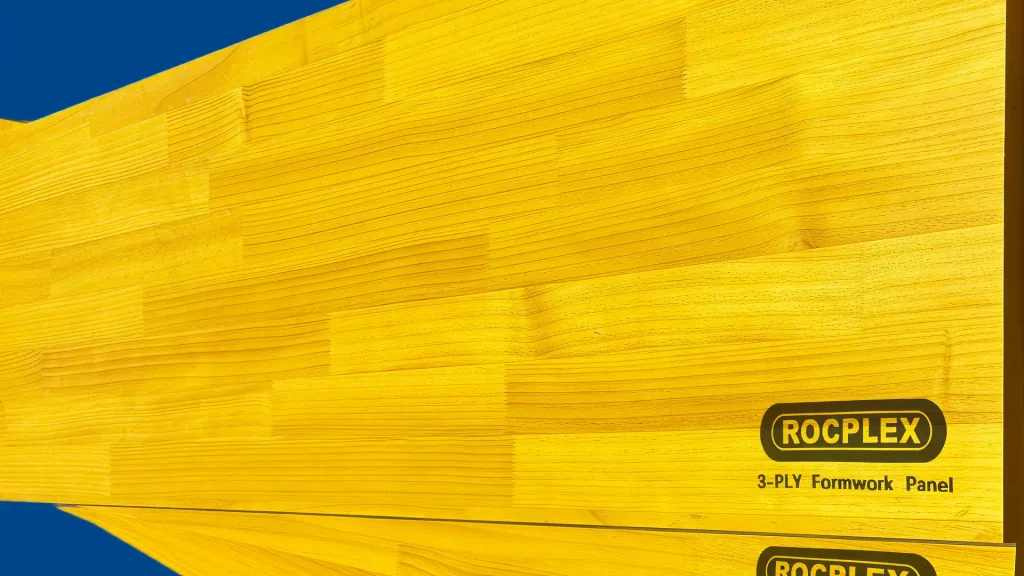
A stronger face layer does more than improve appearance. It helps the board strip cleaner, age slower, and keep value across more pours.
Release agent and edge sealing protect the value you already paid for
Release-agent practice is easy to miss, but it has a direct effect on shuttering ply board life. A board with a good face can still lose value quickly if it is stripped dry, left with concrete residue, or cleaned too aggressively between pours. Buyers are better served by asking one practical question early: what release-agent routine is recommended before first use and during repeat cycles?
Edges need the same attention. Water often enters through the edge before failure becomes visible in the middle. That is why optional edge sealing on the ROCPLEX shuttering ply board matters more than it first sounds. The product page also gives a storage rule that many buyers skip and later regret. Panels should stay on level bearers, off the ground, and under cover with ventilation. Good boards last longer when the storage routine is as disciplined as the bond line.
Treated together, face care and edge care improve three things that buyers feel directly on site: finish consistency, dimensional stability, and reuse life.
Weight still matters because crews handle these boards all day
Another practical check is whether the board is light enough for efficient handling while still stiff enough for repeat formwork use. That balance is one of the more useful points on the ROCPLEX shuttering ply board page. The core is described as Grade A New Zealand radiata pine and European spruce, chosen for strength, stability, and lighter handling. The page also lists an approximate density of 520 kg per cubic meter.
This is a better buying angle than density alone. A very heavy board is not automatically better. It may slow the crew and raise fatigue. A very light board is not automatically cheaper either if it loses shape too early. The better target is a useful weight-to-stiffness balance that supports faster handling without giving up working confidence under repeated concrete formwork use.
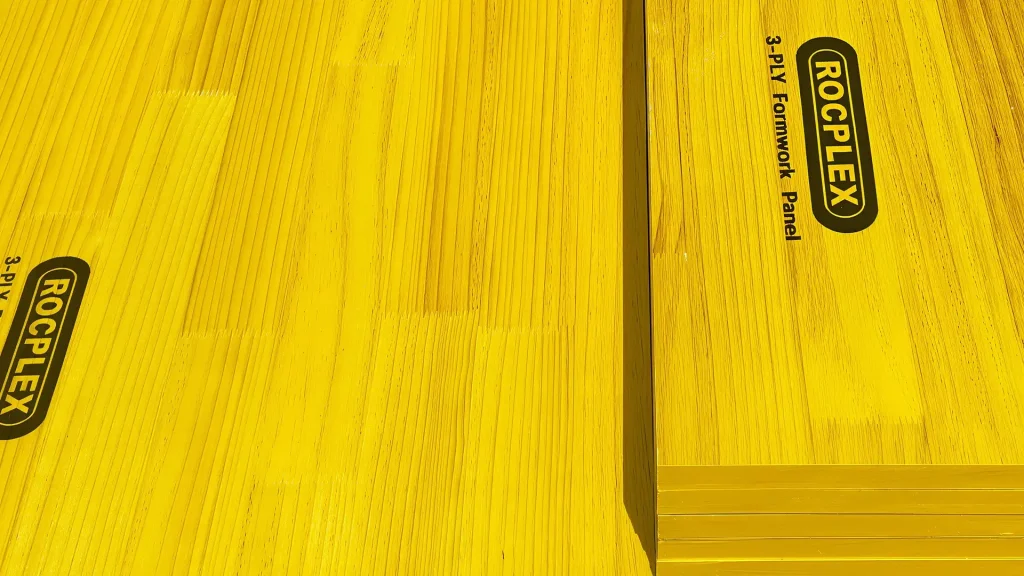
Sourcing details matter when projects ask harder questions later
Technical fit comes first, but sourcing still matters. Buyers who supply projects, distributors, or documented procurement chains often need cleaner paperwork as well as better board performance. That is where chain-of-custody language becomes useful. FSC explains that chain of custody certification verifies that forest-based materials are credibly tracked through the supply chain from sourcing to finished goods. That does not replace formwork checks, but it can add value when customers ask harder sourcing questions later.
FAQ
How many times can a shuttering ply board be reused
Reuse depends on face durability, release-agent practice, edge protection, stripping method, and storage. The ROCPLEX yellow shuttering ply board states up to 40 cycles under optimal conditions.
What should I check first on a shuttering ply board
Check the face system, wet-use bond language, thickness, edge sealing, and intended formwork use before you compare price.
Does edge sealing really change shuttering ply board life
Yes. Water often enters through the edges first. Better edge protection helps reduce swelling, shape change, and early loss of reuse value.
What is the best buying metric besides shuttering ply board price
Use cost per pour. Compare finish quality, strip speed, reuse life, handling ease, and supply consistency rather than price alone.
Buy shuttering ply board for cost per pour not first sheet price
The best shuttering ply board is not the one with the easiest headline. It is the one that fits the pour method, finish target, support layout, handling routine, and reuse plan on your site. For buyers who want a practical mix of smoother finish, useful cycle life, wet-use bond confidence, and manageable weight, the ROCPLEX 3 Ply Yellow Formwork Panels sit in a sensible part of the market. Start with the job conditions, not the surface color, and the right panel choice becomes much easier.
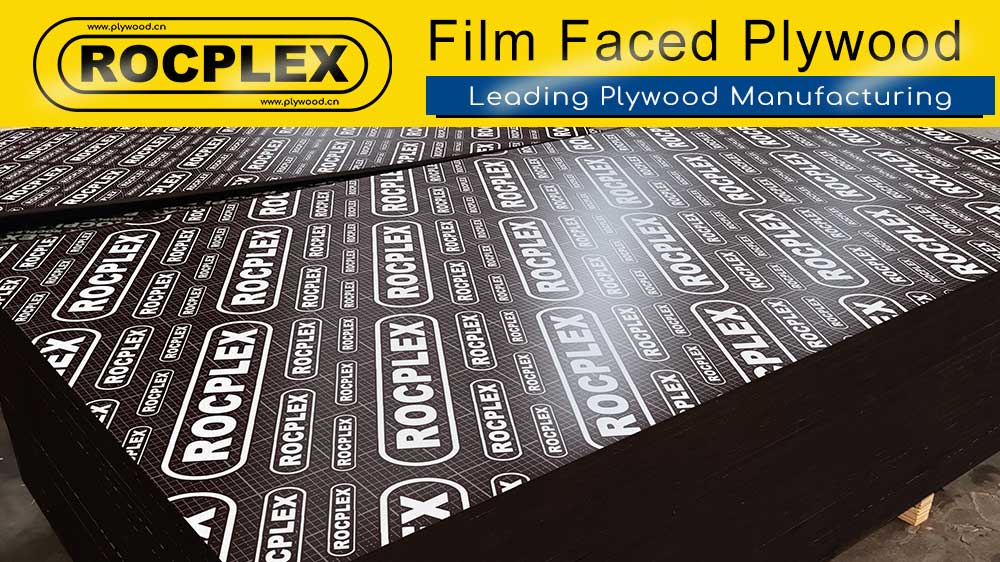
Formwork Plywood
What is Formwork Plywood?
Formwork plywood is a wood-based panel engineered to hold wet concrete until it sets. With its strong core and waterproof surface, it ensures stable formwork and smooth concrete finishes.
Builders use it in slabs, beams, walls, and columns. Unlike standard plywood, it is designed for repeated cycles of use. This durability makes it cost-effective for contractors and a dependable product for global wholesalers.
Role in Concrete Construction
Accurate formwork systems are vital for modern projects. High-pressure concrete requires panels that resist bending or swelling. Construction plywood offers the strength needed for large pours and detailed structures.
Its stability reduces errors and rework. For infrastructure such as bridges, highways, and industrial facilities, reliable panels are critical. This is why concrete form plywood remains in constant demand.
Main Advantages
Contractors and wholesalers value these benefits:
-
Durability – Handles heavy loads without warping.
-
Moisture Protection – Coated surfaces prevent swelling.
-
Reusable – Panels survive multiple pours.
-
Smooth Finish – Produces defect-free surfaces.
-
Versatile Use – Suitable for slabs, beams, and columns.
These features make it more dependable than shuttering plywood or lower-grade options.
Common Applications
Concrete mold plywood is used across diverse projects:
-
Slabs – Reliable support for horizontal pours.
-
Walls and Columns – Sharp edges and smooth surfaces.
-
Foundations – Moisture-resistant for underground structures.
-
Infrastructure – Essential in highways, bridges, and factories.
Wholesalers supplying concrete slab plywood meet the needs of contractors working on both small and mega projects.
Comparison with Shuttering Plywood
Shuttering plywood serves the same purpose but is often made with lower-grade veneers. It is cheaper but lasts fewer cycles.
Concrete form plywood, by contrast, resists water and maintains strength through repeated use. Contractors avoid frequent replacements, saving on costs. Wholesalers benefit by offering a product that builds customer loyalty.
Addressing Contractor Challenges
Construction sites face issues like swelling boards, poor finishes, and short service life. Waterproof plywood addresses these pain points effectively.
-
Prevents Swelling – Water-blocking film keeps panels stable.
-
Better Finish – Surfaces release concrete smoothly.
-
Longer Life – Strong bonds extend usability.
This reliability improves efficiency and reduces waste.
Why Wholesalers Prefer This Material
Distributors need products that ensure stable demand. Concrete form plywood offers consistent sales because it is essential for construction everywhere.
Our manufacturing provides uniform thickness, durable bonding, and reliable moisture protection. Export packaging keeps shipments safe across long distances. Contractors receive quality panels ready for use.
Technical Specifications
-
Size: 1220 x 2440 mm (standard)
-
Thickness: 12–21 mm
-
Core: Hardwood, poplar, or mixed
-
Overlay: 120 g–240 g film in black or brown
-
Adhesive: Waterproof bonding, hot-pressed
-
Edges: Sealed for extra protection
These features guarantee consistent performance on-site.
Performance in Harsh Conditions
Rain, humidity, and extreme climates test materials. Construction plywood resists these factors.
In hot weather, it stays stable. In cold regions, it avoids cracking. Tropical projects also benefit from its moisture resistance.
Cost Efficiency
Contractors calculate value by cost per use. Concrete form plywood offers lower long-term costs thanks to its reusability.
Although initial prices may be higher than shuttering plywood, its lifespan reduces total expenses. Wholesalers highlight this advantage when presenting it to clients.
Safety on Construction Sites
Safety is vital during formwork removal. Panels with weak cores can break and cause accidents.
Concrete mold plywood lowers this risk. Its durability supports safe handling and smooth stripping. Workers save time while staying protected.
Meeting Global Demand
Infrastructure growth in Asia, Africa, and the Middle East keeps demand strong. In Europe and North America, buyers prefer certified and eco-friendly options.
Wholesalers can expand into these regions by offering panels that meet international standards.
Sustainable Production
Our plywood is made from responsibly sourced timber. Adhesives used have low emissions. This supports global green building initiatives.
Wholesalers gain an edge when supplying eco-conscious contractors. Sustainability is now a market advantage.
Packaging and Logistics
Each shipment is palletized, wrapped in waterproof film, and secured with steel straps. Labels clearly show specifications. Containers are loaded carefully for safe transit.
This ensures buyers receive goods in ready-to-use condition.
Formwork Plywood as a Long-Term Investment
Contractors reduce replacement costs with durable panels. Wholesalers benefit from steady demand. Reliable supply chains build trust and support growth.
Driving Global Construction Success
This material remains central to modern building. Its durability, water resistance, and cost savings make it the preferred choice worldwide.
By choosing our panels, contractors and wholesalers secure lasting value for every project.
Post time: May-04-2026