

Plywood sheets are often ordered by size and thickness, but serious buyers know that a sheet is more than a flat wood panel. It is a full buying unit. Size, core, glue, face grade, tolerance, moisture, packing, loading, and final use all decide whether the sheet performs well after delivery.
That is why a buyer should not ask for “18 mm plywood” and stop there. The same size sheet can be made for furniture, formwork, packaging, flooring, wall lining, roof work, shopfitting, or industrial use. Each job needs a different balance of strength, surface, moisture risk, weight, and price.
This guide looks at plywood sheets from a buyer’s desk, not from a dictionary. It explains how to read the sheet as a product format, a cost unit, and a delivery risk unit. The goal is simple: choose panels that fit the job and arrive ready to sell or use.
Plywood Sheets in One Practical Answer
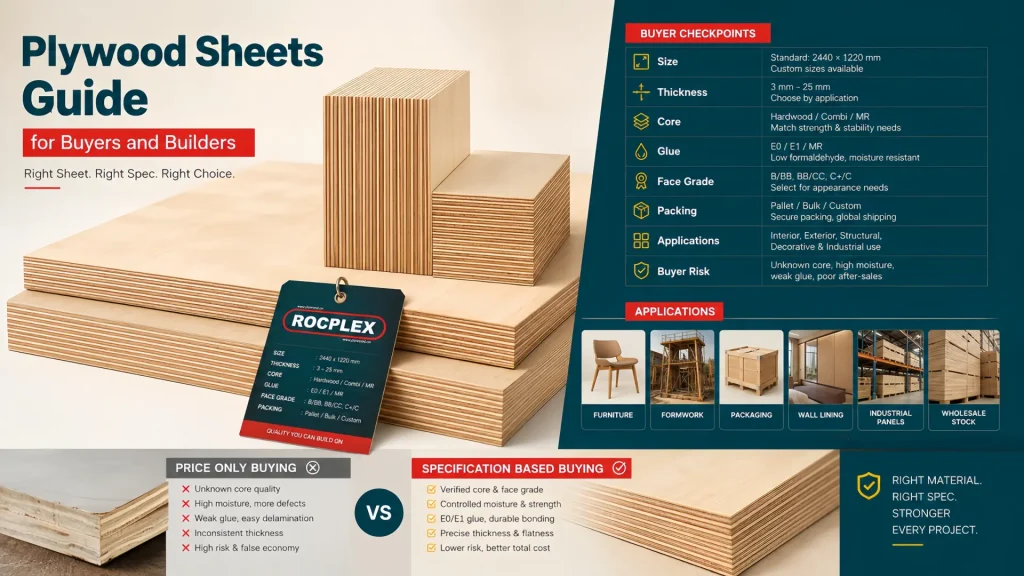
Ply sheets are engineered wood panels made from bonded veneer layers. Buyers should choose them by final use, sheet size, thickness, core type, glue bond, face grade, tolerance, packing, and expected handling conditions.
Start With the Job Not the Sheet Name
The best plywood order starts with the job. A sheet for cabinet making does not need the same face, glue, or core as a sheet for concrete formwork. Plywood sheet for packaging may need strong nail holding and fair cost control. A sheet for shopfitting may need a clean surface and stable thickness.
For this reason, buyers should define the use before asking for price. Is the panel visible after installation? Will it be cut by CNC? Will it hold screws? It face moisture? Will it be reused? Will the customer judge the face, the edge, or the finished part?
This job first method is a stronger way to choose plywood sheets. It reduces false price checks and helps suppliers quote a panel that matches the buyer’s real market.
Sheet Size Affects Yield Freight and Handling
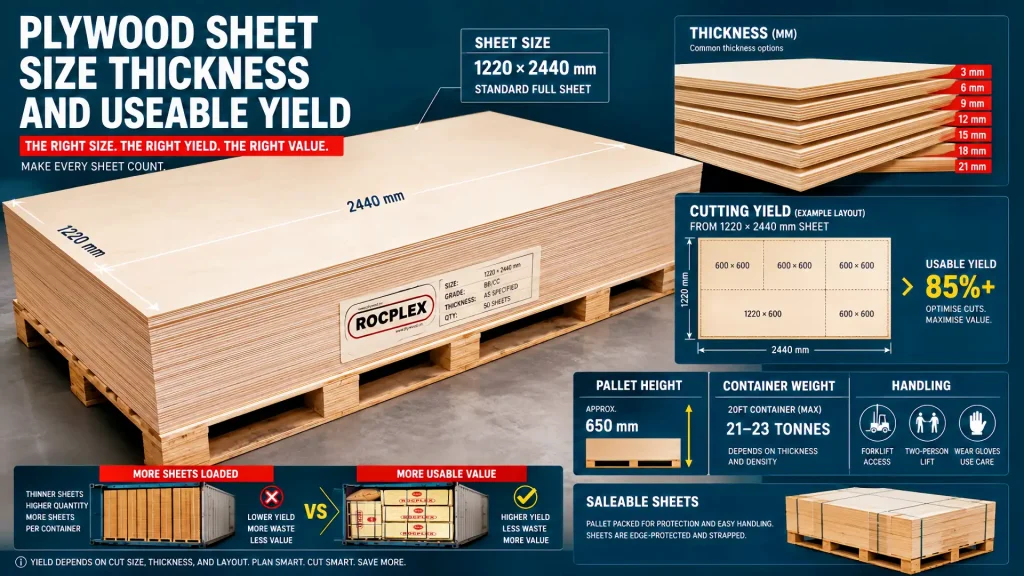
Plywood sheet size is not only a measurement. It affects cutting yield, pallet size, container loading, local handling, and buyer stock planning. The common export format is 1220 × 2440 mm, but other sizes can be used for special markets, projects, furniture parts, and formwork systems.
A larger sheet can reduce joints and improve cutting yield in some jobs. However, it can also raise handling cost, increase damage risk, and make loading harder. A smaller sheet may be easier to move, but it may create more waste if it does not match the cutting plan.
Before confirming size, buyers should check warehouse doors, forklift access, jobsite handling, cutting layout, pallet height, and container weight. A good sheet size works across production, transport, and final use.
Thickness Should Match Real Use
Thickness is one of the first details buyers check, but nominal thickness is not enough. Buyers also need actual thickness, tolerance, density, core quality, and stiffness. A poor core can make a thick sheet feel weak. A well made panel can give better value with less waste.
Thin panels often suit backing, drawer bottoms, packaging, and light interior work. Mid range panels suit cabinets, shelves, wall panels, and general construction needs. Thicker panels suit flooring, formwork, platforms, industrial uses, and stronger load needs.
The key is not to buy the thickest sheet. The key is to buy the right thickness for the span, fixing method, edge support, screw holding, cutting plan, and customer expectation.
Surface Grade Controls Visible Value
Surface grade is where many buyers either overpay or underbuy. High grade faces matter when the panel is visible, painted, laminated, stained, or used in furniture. Lower visual grades can work well for backing, crates, covered construction layers, or hidden parts.
When comparing plywood panels, buyers should ask how the face and back are graded. They should check repairs, knots, patches, sanding quality, colour range, splits, overlaps, and face veneer thickness. A smooth photo of one top sheet does not prove the full pallet quality.
A practical sheet order should state face grade and use case together. This helps prevent disputes. It also helps the supplier choose the right veneer and finish from the start.
Core and Glue Decide Hidden Performance
The core is hidden after the sheet is made, but it carries much of the panel value. Poplar, hardwood, eucalyptus, birch, combi, and other core choices affect weight, strength, screw holding, flatness, and price. Clear core control is vital for repeat orders.
Glue matters as well. Interior panels, exterior panels, film faced panels, and marine or structural panels need different bond choices. The wrong glue can create risk when the sheet faces moisture, heat, concrete work, or repeated handling.
This is why buyers should ask what is inside plywood sheets, not only what is printed on the invoice. Core gaps, veneer overlap, glue spread, moisture, and press control can decide the result long before the buyer sees the pallet.
| Buyer need | Key sheet factor | What to check |
|---|---|---|
| Furniture parts | Surface and thickness | Face grade, sanding, flatness, tolerance |
| Formwork use | Glue and surface film | Bond quality, edge seal, film face, reuse target |
| Packaging | Cost and nail holding | Core strength, thickness, cutting yield |
| Wall lining | Appearance and stability | Face repair, colour, flatness, moisture |
| Industrial panels | Strength and repeat supply | Density, core gaps, batch control |
| Wholesale stock | Saleable value | Clean faces, pallet marks, packing, mixed sizes |
Packing Turns Good Sheets Into Saleable Stock
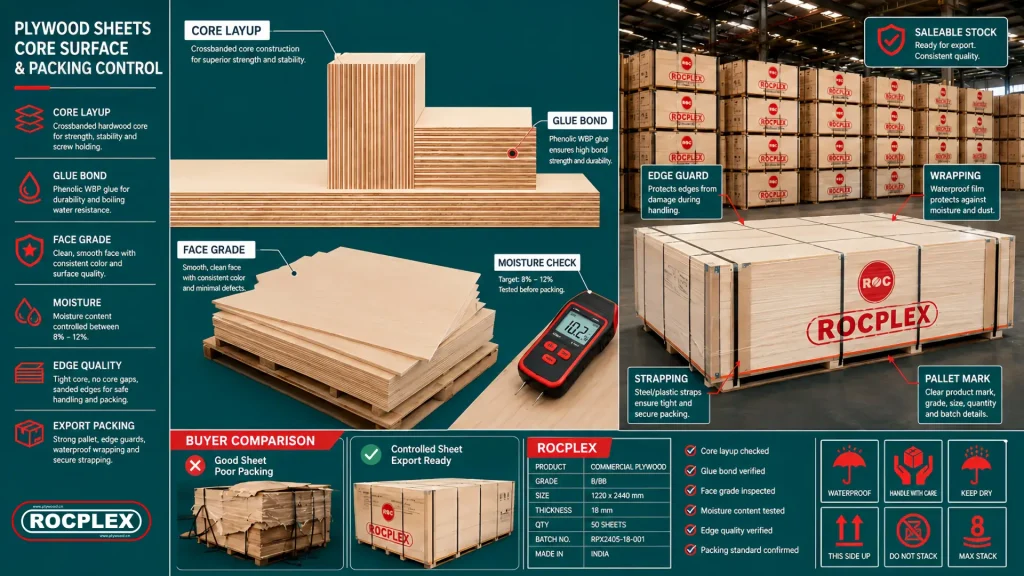
Good production can still lose value through poor packing. Plywood faces can scratch. Corners can break. Edges can take moisture. Pallets can bend. Straps can mark the top panels. These problems may not ruin every sheet, but they can reduce sale value.
For export buyers, packing should be part of the sheet spec. A strong pallet, top board, corner guards, side protection, wrapping, labels, and clear marks help protect the goods during factory handling, sea freight, port work, and warehouse unloading.
Buyers planning container orders should link sheet choice with loading needs. For a deeper logistics view, the container loading guide explains how weight, pallet design, moisture, photos, and loading order affect arrival quality.
Plywood Sheets Should Be Compared by Useable Yield
Sheet price is easy to compare. Useable yield is harder, but it gives better buying insight. A cheap sheet can cost more if it creates cutting waste, surface rejection, broken corners, edge swelling, or slow resale. A stronger sheet may create better value if more panels can be used without extra repair.
For furniture factories, yield means finished parts per sheet. For wholesalers, it means clean saleable panels per pallet. Formwork buyers, it may mean cost per pour. For packaging buyers, it means stable output per cutting plan.
This view changes the buying discussion. The best plywood quote is not always the lowest sheet price. It is the quote that gives the best useable result for the buyer’s market.
How Different Buyers Should Choose Sheets
Different buyers need different controls. A builder may care about fit, stiffness, and jobsite handling. A furniture factory may care about sanding, face quality, and machining. A distributor may care about pallet presentation, range, and repeat stock. A formwork buyer may care about release, edge seal, bond, and reuse.
For a basic product understanding, read what is plywood. For grade and product range planning, the types of plywood guide gives a wider view of common plywood categories.
When buying plywood sheets by container, buyers should also review price drivers. The plywood price guide explains how core, glue, surface, packing, documents, and freight affect real cost.
Buyer Confirmation List Before Ordering
A clear buying list avoids weak quotes and unclear claims. Buyers should confirm the main points before price approval, especially for first orders or mixed product shipments.
- Final use and buyer market.
- Sheet size, thickness, and tolerance.
- Core species and core quality rule.
- Face and back grade.
- Glue type and moisture exposure level.
- Surface finish, sanding, film, coating, or laminate need.
- Moisture range before packing.
- Pallet structure, wrapping, corner protection, and marks.
- Container loading method and photo record.
- Certificates, test reports, or chain of custody documents.
This list turns a general sheet request into a clear buying spec. It also gives suppliers a fair basis to quote the right product.
Common Mistakes When Buying Plywood Sheets
Most sheet buying mistakes come from vague specs. Buyers ask for the size and thickness, but leave core, glue, face grade, tolerance, moisture, and packing open. This creates space for false price comparison.
- Comparing prices without matching core and face grade.
- Using one sheet type for too many different jobs.
- Ignoring actual thickness tolerance.
- Choosing a smooth face while missing weak core control.
- Forgetting pallet strength and corner protection.
- Buying by sheet count instead of useable yield.
- Confirming certificates after production instead of before order.
- Trusting one sample without checking bulk order rules.
These mistakes are easy to avoid when the buyer treats each sheet as a full spec. Clear details create better production, smoother delivery, and fewer disputes.
How ROC Supports Plywood Sheet Buyers
ROC supports buyers who need plywood led engineered wood supply. Plywood remains the main product axis, while OSB, MDF, particle board, LVL timber, H20 beams, I joists, and other products support one stop sourcing needs.
For buyers sourcing plywood sheets, ROC can help review size, thickness, core, glue, face grade, finish, tolerance, packing, loading, documents, and repeat supply planning. The goal is not only to ship panels, but to reduce buyer risk across pallets and containers.
A wholesaler may need stable stock and clean pallets. A builder may need fit for site use. A factory may need better cutting yield. A formwork buyer may need stronger panels and lower cost per use. Each buyer needs a sheet spec that matches the business result.
Buyers can review the plywood product range or send sheet requirements through the contact page for specification review.
FAQ
What are plywood sheets?
Plywood sheets are engineered wood panels made from bonded veneer layers. They are used in furniture, construction, formwork, packaging, interiors, and industrial work.
What size are plywood sheets?
Common export plywood sheet size is 1220 × 2440 mm. Other sizes can be produced for special markets, furniture parts, formwork, or project use.
How do I choose plywood sheet thickness?
Choose thickness by span, support, screw holding, cutting plan, load need, surface finish, and final use. Do not judge by nominal thickness alone.
Which plywood sheet is best for furniture?
Furniture usually needs stable thickness, smooth sanding, clean face grade, good screw holding, and a core that machines well with low waste.
What affects plywood sheet price?
Core species, glue type, face grade, thickness, tolerance, surface finish, packing, documents, order volume, and freight all affect sheet price.
Should plywood sheets be checked before loading?
Yes. Buyers should check sheet quality, pallet strength, moisture, labels, packing, loading photos, and documents before shipment.
Official References for Further Reading
Post time: Jun-24-2026